
TL;DR:
- Pet dander proteins from cats and dogs can embed deeply in bedding, causing allergic reactions. Regular washing at 130°F, allergen-proof encasements, and professional cleaning are essential for long-term allergen reduction. Combining surface cleaning with air purifiers effectively minimizes airborne allergens and improves sleep quality.
Pet dander in bedding is defined as the accumulation of microscopic allergenic proteins shed from cats, dogs, and other animals directly onto the fabrics where you sleep. Removing pet dander from bedding is the single most effective step pet owners can take to reduce allergen exposure, because the bedroom is where you spend roughly 8 uninterrupted hours breathing in whatever your mattress and sheets hold. The American College of Allergy, Asthma and Immunology (ACAAI) and the EPA both identify pet allergens as among the most common indoor triggers for respiratory symptoms. Unlike a living room couch, your bed offers no escape once you lie down. That continuous contact is what makes bedding the highest-priority surface to clean.
Why remove pet dander from bedding: the core health case
Pet dander is not fur. The real culprits are proteins called Fel d 1 (from cats) and Can f 1 (from dogs), found in skin flakes, saliva, and gland secretions. These proteins are the primary triggers for allergic reactions, not the visible hair your lint roller picks up. That distinction matters because it explains why a “fur-free” bed can still cause sneezing, itchy eyes, and congestion.
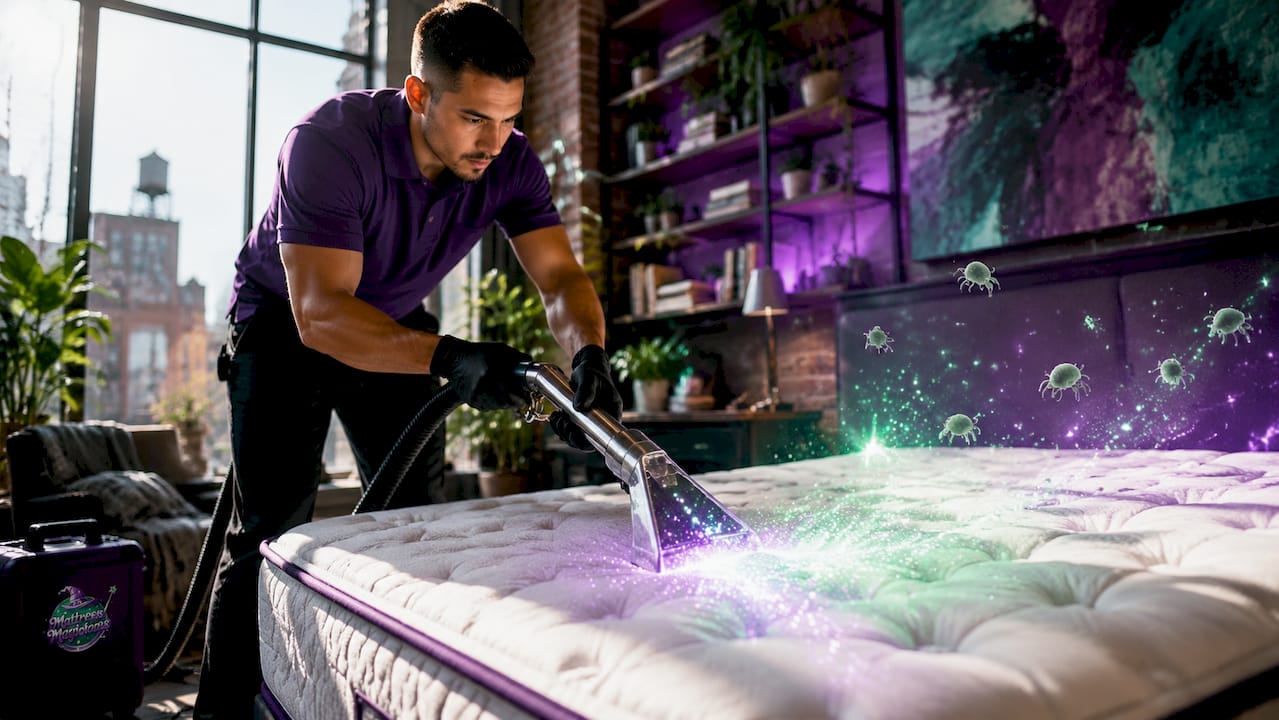
Bedroom allergen exposure is uniquely harmful compared to other rooms because of continuous 8-hour breathing contact. A brief sit on a dander-covered couch is a minor exposure. Eight hours of inhaling allergens embedded in your pillow is a sustained assault on your respiratory system. Symptoms worsen overnight and peak in the morning, which is the classic pattern for bedding-related allergies.
Dander particles are also jagged at the microscopic level. That irregular shape creates aerodynamic drag, which keeps particles airborne for 4–6 hours after any disturbance. Every time you roll over or shake out a sheet, you re-suspend a cloud of allergens directly at face level.
- Fel d 1 and Can f 1 bind electrostatically to textile fibers, making them resistant to simple shaking or brushing.
- Dander embeds beyond 2–3 mm into mattress cores, well past the reach of standard vacuum suction.
- Allergens persist for weeks to months in bedding even after a pet stops sleeping on the bed.
- Clothing transfers dander from other rooms, so your bed accumulates allergens even if your pet never enters the bedroom.
Pro Tip: If your allergy symptoms are worst in the morning and improve after you leave the house, your bedding is almost certainly the primary allergen source. Start there before treating any other room.
What are the most effective methods to remove pet dander from bedding?
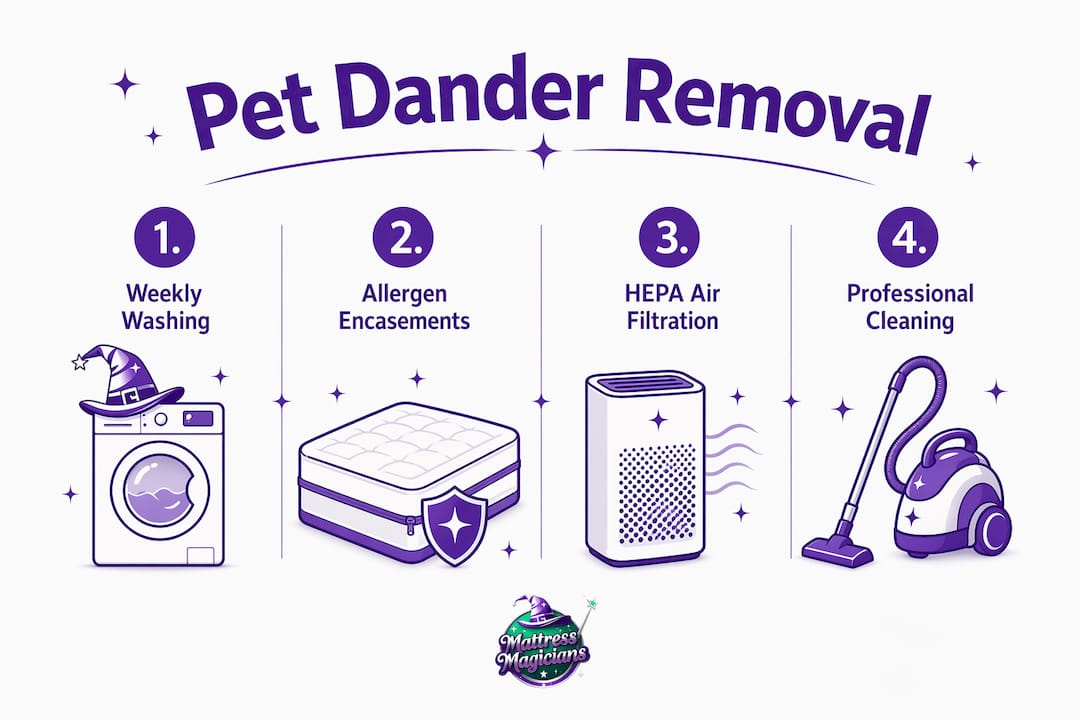
Washing bedding at the right temperature is the foundation of allergen control. Health organizations recommend a minimum water temperature of 130°F (55°C) to neutralize pet dander and dust mite allergens. Warm or cool water washes move allergens around without deactivating the proteins. Hot water breaks down the protein structure, which is what actually stops the allergic reaction.
Here is a practical, step-by-step cleaning protocol for pet owners:
- Strip and bag bedding immediately. Fold sheets inward to trap dander rather than shaking them out. Shaking re-suspends allergens into the air and onto nearby surfaces.
- Wash at 130°F or higher. Use a fragrance-free, enzyme-based detergent. Add an extra rinse cycle to flush out detergent residue, which can itself irritate sensitive airways.
- Dry on high heat. High dryer temperatures provide a second round of allergen neutralization. Do not air-dry bedding indoors if you have pets.
- Vacuum the mattress with a HEPA-filter vacuum. Standard vacuums without HEPA filtration redistribute allergens through their exhaust rather than capturing them. Mechanical vibration can also push particles deeper into the mattress temporarily.
- Encase the mattress and pillows. Allergen-barrier encasings with a pore size below 6 microns block dander aerosolization from the mattress surface. This is one of the highest-impact single purchases for allergy sufferers.
- Groom your pet regularly. Bathing dogs weekly and brushing cats outdoors reduces the total dander load they shed. Less dander on the animal means less dander reaching your bed.
- Keep pets off the bed. Relocating pet sleeping areas away from human beds measurably decreases dander transfer over weeks. This is the most direct way to reduce the source.
Pro Tip: Wash your bedding every 7 days if you share a home with a pet, even if the pet never enters the bedroom. Dander travels on clothing and through air currents. Weekly washing at 130°F is the minimum effective frequency.
For pet owners dealing with accidents on the mattress itself, a pet accident cleanup guide covers the specific steps to remove stains and biological residue before allergens set deeper into the fabric layers.
How can air quality management complement bedding cleaning?
Air purifiers address the airborne fraction of pet allergens, which bedding washing alone cannot reach. HEPA filtration reduces airborne allergens by 70–90% in a bedroom within 30–60 minutes of operation. That is a meaningful reduction, but it comes with an important caveat: air purifiers only capture what is floating. They do nothing for allergens already embedded in your mattress, pillows, or sheets.
The most effective approach combines both strategies. Clean the surfaces first, then use an air purifier to manage what gets disturbed and re-suspended during sleep. Running the purifier continuously in the bedroom, with the door closed, prevents allergens from drifting in from other rooms where pets spend time.
- Run the purifier 24 hours a day in the bedroom. Turning it off overnight defeats the purpose, since dander disturbance peaks during sleep movement.
- Keep bedroom doors closed to limit allergen migration from pet-occupied rooms.
- Maintain indoor humidity between 30% and 50%. Low humidity keeps dander particles lighter and more airborne. High humidity encourages mold growth. The 30–50% range is the target for allergen control.
- Replace HEPA filters on schedule. A clogged filter loses efficiency and can begin releasing trapped particles back into the air.
Stat to know: HEPA air purifiers improved cat allergy symptoms in 70% of participants in clinical trials when used consistently. That result only holds when surface allergens in bedding are also managed.
The average person spends 2,500+ hours in bed annually. An air purifier running during those hours provides meaningful protection, but only as part of a complete strategy that includes regular bedding washing and mattress encasements.
How to maintain a long-term allergen-reduced sleep environment
Sustained allergen reduction requires a routine, not a one-time deep clean. Pet dander accumulates continuously, so the cleaning schedule has to match that pace. Here is what a consistent maintenance plan looks like for pet-owning households:
- Wash all bedding weekly at 130°F, including pillowcases, duvet covers, and any blankets pets contact.
- Vacuum the mattress monthly using a HEPA-filter vacuum. For a guide on removing pet hair from mattress surfaces, specific techniques make a measurable difference in allergen load.
- Change into fresh clothes before bed. Clothing carries allergens between rooms. Changing before sleep prevents dander from transferring directly onto pillowcases and sheets.
- Wash pet bedding weekly at the same temperature as human bedding. A clean pet bed means less dander shed onto floors and furniture, which then migrates to your bed.
- Choose washable, tightly woven bedding materials. Microfiber and percale cotton with tight thread counts trap less dander than loose-weave fabrics. Avoid heavy quilts or comforters that are difficult to wash at high temperatures.
- Schedule professional mattress cleaning every 6–12 months. DIY methods cannot reach allergens embedded deep in mattress cores. Professional cleaning extracts dander, dust mites, and biological residue from layers that home vacuums miss entirely.
The cumulative benefit of these habits compounds over time. Households that maintain weekly washing, encasements, and regular professional cleaning report sustained symptom improvement rather than the temporary relief that comes from a single deep clean.
| Intervention | Frequency | Primary benefit |
|---|---|---|
| Hot water bedding wash | Weekly | Neutralizes Fel d 1 and Can f 1 proteins |
| HEPA vacuum on mattress | Monthly | Removes surface-level dander and debris |
| Allergen-barrier encasings | Permanent | Blocks dander from penetrating mattress core |
| HEPA air purifier | Continuous | Reduces airborne allergen load during sleep |
| Professional mattress cleaning | Every 6–12 months | Extracts deep-embedded allergens beyond DIY reach |
For a broader look at what else accumulates in your sleeping area, the guide on household allergens in bedrooms covers dust mites, mold spores, and other triggers that compound the effects of pet dander.
Key Takeaways
Removing pet dander from bedding requires weekly hot-water washing, allergen-barrier encasements, HEPA air filtration, and professional mattress cleaning to sustain meaningful allergen reduction over time.
| Point | Details |
|---|---|
| Dander is protein, not fur | Fel d 1 and Can f 1 proteins cause reactions and persist in bedding for weeks. |
| Hot water is non-negotiable | Wash bedding at 130°F minimum to neutralize allergenic proteins effectively. |
| Standard vacuums make it worse | Vacuums without HEPA filters redistribute allergens rather than removing them. |
| Encasements block the source | Sub-6-micron pore encasings prevent dander from releasing out of the mattress. |
| Professional cleaning reaches deeper | DIY methods cannot extract allergens embedded beyond 2–3 mm in mattress cores. |
The bedroom is the last place to cut corners on allergen control
People consistently underestimate how much allergen load their mattress holds. I have seen households where the owner vacuumed religiously, ran an air purifier, and still woke up congested every morning. The mattress was the problem every time. It had never been professionally cleaned, and years of dander had built up in layers that no home vacuum could reach.
The other misconception I run into constantly is the fur-versus-dander confusion. Pet owners remove visible hair from their sheets and feel like the job is done. It is not. The proteins causing the reaction are invisible. You cannot see Fel d 1. You cannot feel it. You only notice it when your immune system responds at 2 AM.
The households that get this right share one habit: they treat the bedroom as a controlled environment, not just another room to tidy. That means a closed door, a running purifier, weekly hot washes, and a mattress that gets professional attention at least once a year. Pets and good sleep are not mutually exclusive. They just require a system.
— Phillip
When DIY is not enough: professional allergen removal for your mattress
Washing sheets and running an air purifier handles the surface layer. The mattress itself is a different problem. Allergens embedded deep in the core require extraction methods that go beyond what home equipment can deliver. Mattressmagicians provides professional mattress cleaning across the Twin Cities, including Minneapolis, St. Paul, and Woodbury, with services specifically designed for allergen reduction, pet dander removal, and sanitization. The process reaches the layers of your mattress that weekly washing cannot touch. For households in the Minneapolis area dealing with persistent allergy symptoms, same-week mattress cleaning is available with no equipment to rent and no hassle to manage.
FAQ
What exactly is pet dander and why does it cause allergies?
Pet dander consists of microscopic protein particles, primarily Fel d 1 from cats and Can f 1 from dogs, shed through skin flakes, saliva, and gland secretions. These proteins trigger immune responses in sensitive individuals, causing sneezing, congestion, and itchy eyes.
How often should pet owners wash their bedding?
Pet owners should wash all bedding weekly at a minimum water temperature of 130°F (55°C). This frequency and temperature are necessary to neutralize allergenic proteins before they accumulate to symptom-triggering levels.
Can pet dander stay in a mattress even if the pet never sleeps on the bed?
Yes. Dander travels on clothing and through air currents, and once it settles into a mattress it can persist for weeks to months. Allergen-barrier encasings and professional cleaning are the most effective ways to address this.
Do air purifiers remove pet dander from bedding?
Air purifiers remove airborne dander but cannot extract allergens already embedded in fabrics. HEPA filtration reduces airborne allergens by 70–90% in a bedroom within 30–60 minutes, but it works best as a complement to regular bedding washing and mattress cleaning.
When should a pet owner consider professional mattress cleaning?
Professional mattress cleaning is appropriate when DIY methods no longer control allergy symptoms, when a mattress has not been cleaned in over a year, or after significant pet accidents. Professional extraction reaches allergens embedded beyond 2–3 mm in the mattress core, which home vacuums cannot access.

