
TL;DR:
- Hypoallergenic bedding reduces allergen exposure by using tightly woven fabrics and certified materials. Its effectiveness depends on fabric structure, certifications, and proper care routines, but it is not legally defined. Combining certified bedding with mattress cleaning and maintenance provides better allergy relief.
Hypoallergenic bedding is defined as bedding designed to minimize exposure to common allergens, including dust mites, pet dander, mold spores, and chemical irritants. The term describes a category of sleep products built from tightly woven fabrics, low-chemical materials, and constructions that physically block allergen penetration. Allergic rhinitis affects 20–30% of adults globally, making the bedroom one of the highest-risk allergen environments in any home. The catch: “hypoallergenic” carries no federal legal definition in the United States, so the label alone tells you nothing. What actually matters is the fabric structure, certifications, and care routine behind the product.
What is hypoallergenic bedding made of?
The physical structure of a fabric determines its allergen-blocking ability. Fabrics with a thread count of 300 or higher and pore sizes below 6 microns block dust mite penetration effectively. That pore size matters because the average dust mite measures roughly 200–300 microns in body length, but its fecal particles, the actual allergen, are far smaller. A tight weave stops those particles from migrating through the fabric into your breathing zone.
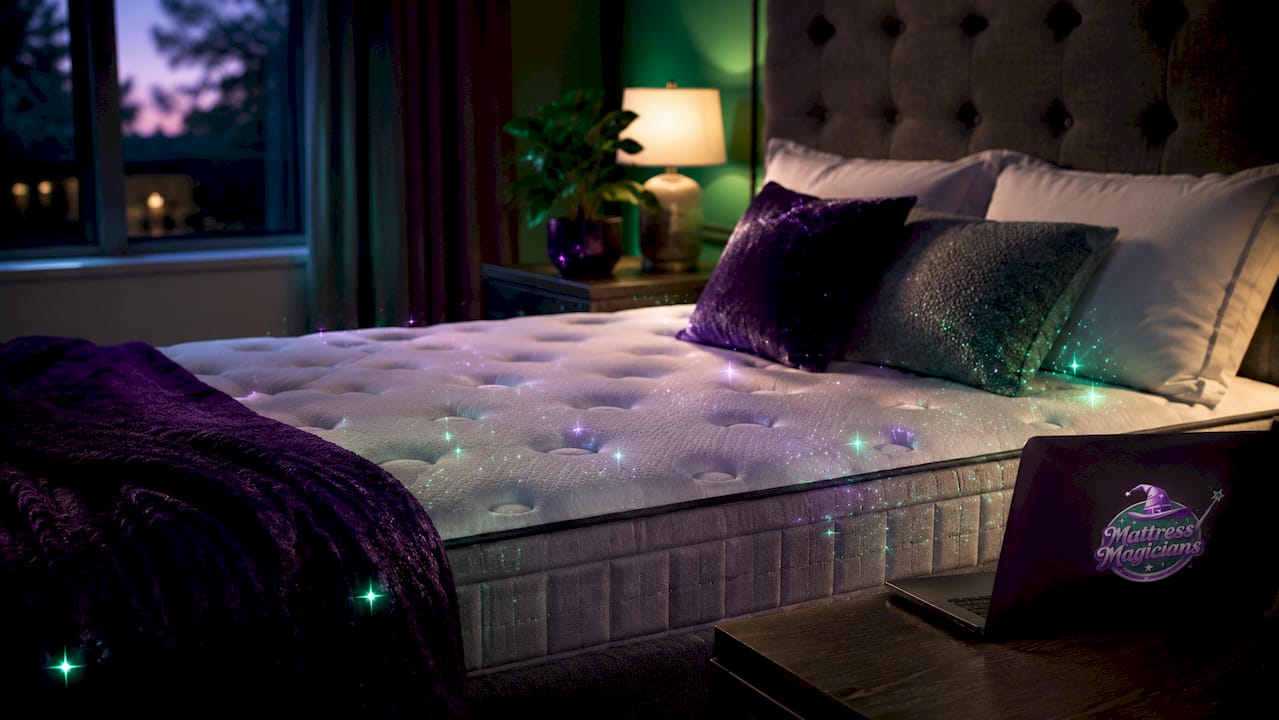
Several natural fibers appear frequently in allergy-friendly bedding. Long-staple cotton, Tencel (lyocell), bamboo viscose, and wool each offer breathability and moisture-wicking properties that limit the humid microclimate dust mites need to survive. However, the fiber origin alone does not guarantee allergen control. Bamboo viscose processing often removes natural antimicrobial features, meaning the weave and maintenance routine carry more weight than the fiber’s marketing story.
Chemical content is the other half of the equation. OEKO-TEX Standard 100 certification confirms that a fabric has been tested for harmful chemicals and volatile organic compounds. For people with asthma or chemical sensitivities, this certification is a more reliable signal than any “natural” or “hypoallergenic” label on the packaging.
| Material | Thread count range | Allergen barrier | Moisture-wicking | Key consideration |
|---|---|---|---|---|
| Long-staple cotton | 300–600 | Strong | Good | Durable, widely available |
| Tencel (lyocell) | 300–500 | Strong | Excellent | Smooth texture, low friction |
| Bamboo viscose | 250–400 | Moderate | Excellent | Processing affects antimicrobial benefit |
| Wool | N/A (knit) | Moderate | Excellent | Naturally temperature-regulating |
| Microfiber polyester | 200–400 | Moderate | Poor | Traps heat, may irritate sensitive skin |
Pro Tip: When shopping for hypoallergenic sheets, look for both a thread count above 300 and an OEKO-TEX Standard 100 label. One without the other leaves a gap in your allergen defense.
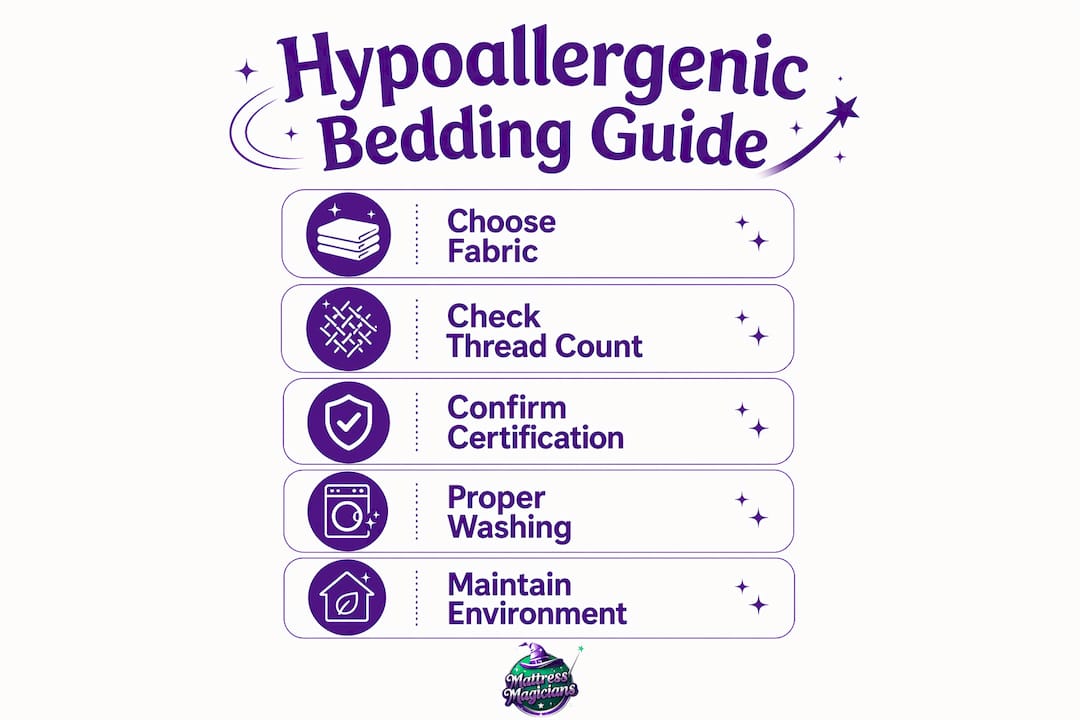
Does “hypoallergenic” on the label actually mean anything?
The honest answer is: not legally. The U.S. Food and Drug Administration and the Federal Trade Commission have never established a binding definition for “hypoallergenic” in textiles or personal care products. That gap creates real risk. 57–80% of products claiming to be safe for sensitive skin still contain known sensitizers, including preservatives like methylisothiazolinone, a compound linked to contact dermatitis.
The distinction between “hypoallergenic,” “fragrance-free,” and “dye-free” is worth understanding. “Fragrance-free” means no added scent compounds, a verifiable claim. “Dye-free” means no synthetic colorants. “Hypoallergenic” means nothing specific without third-party testing behind it. For allergy sufferers, fragrance-free and dye-free labels combined with independent certification give you far more confidence than “hypoallergenic” alone.
Third-party certifications fill the regulatory gap. Beyond OEKO-TEX Standard 100, look for GOTS (Global Organic Textile Standard) for organic fiber verification and GREENGUARD Gold for low chemical emissions. These programs require independent lab testing, not just manufacturer self-reporting.
Watch for these common misleading claims on bedding packaging:
- “Naturally hypoallergenic” — no standard defines this; fiber origin does not equal allergen control
- “Clinically tested” — without published methodology, this phrase is meaningless
- “Antimicrobial protection” — often a chemical treatment that washes out after a few cycles
- “Allergy-approved” — not a recognized certification from any regulatory body
- “Dermatologist recommended” — does not indicate independent testing or any specific standard
Pro Tip: Before buying, search the product name alongside “OEKO-TEX” or “GOTS” to verify certification status directly on the certifying body’s database. Manufacturers sometimes display outdated or expired certificates.
How to care for hypoallergenic bedding to keep allergens low
Buying the right bedding is step one. Maintaining it correctly is what actually keeps allergen levels down over time. Washing bedding weekly at 140°F (60°C) kills dust mites reliably. Cooler temperatures, even hot to the touch, do not reach the thermal threshold needed to eliminate mites and their eggs.
Detergent choice matters too. Use fragrance-free, dye-free detergents and skip fabric softeners entirely. Softener residue coats fibers and can trap allergen particles rather than releasing them during the rinse cycle. For people with eczema or chemical sensitivities, even trace fragrance compounds in “gentle” detergents can trigger a reaction.
Mattress and pillow encasements add a physical barrier layer that sheets alone cannot provide. A zippered encasement with a pore size below 6 microns wraps the entire mattress or pillow, blocking mite colonization at the source. Pillows should be replaced every 1–2 years because filling degrades over time, reducing the encasement’s effectiveness and allowing allergen accumulation inside the pillow itself.
A practical weekly bedding care routine looks like this:
- Strip all sheets, pillowcases, and duvet covers every seven days.
- Wash at 140°F (60°C) using a fragrance-free, dye-free detergent.
- Dry on high heat for at least 30 minutes to eliminate any surviving mites.
- Vacuum the bare mattress surface before remaking the bed. For a deeper clean, professional mattress cleaning removes embedded debris that vacuuming misses.
- Wipe down pillow encasements with a damp cloth and allow to dry fully before replacing pillowcases.
- Air out the bedroom for 10–15 minutes to reduce indoor humidity, which dust mites require to thrive.
Pairing this routine with bedroom air quality improvements, such as HEPA air purifiers and humidity control, multiplies the effect of hypoallergenic fabric care.
What are the real benefits of switching to hypoallergenic bedding?
Hypoallergenic bedding reduces allergen load in your immediate sleep environment. It does not cure allergies or asthma. That distinction matters because people who switch bedding and see no immediate improvement often conclude the product failed, when in reality allergen control requires a layered approach.
Research links reduced allergen exposure during sleep to fewer nighttime allergy symptoms and better sleep continuity. Fabric texture and breathability directly affect skin irritation, particularly for people with eczema or contact dermatitis. Smooth, low-friction fabrics like Tencel reduce mechanical irritation on sensitive skin, which compounds the benefit of lower allergen exposure.
Hypoallergenic bedding is a passive tool. Active allergen management requires consistent cleaning and physical barrier methods working together. Bedding alone reduces exposure; cleaning eliminates the source.
The realistic benefits for allergy and asthma sufferers include:
- Fewer nighttime symptoms — reduced nasal congestion, sneezing, and eye irritation during sleep
- Lower asthma trigger load — less dust mite allergen in the breathing zone during the 7–8 hours spent in bed
- Reduced skin irritation — smooth, chemical-free fabrics lower friction and chemical contact for sensitive skin
- Better sleep continuity — fewer symptom interruptions mean more restorative sleep cycles
The most common pitfall is treating bedding as the only intervention. A dust-mite-proof sleeping space combines hypoallergenic fabrics, encasements, regular washing, and professional mattress cleaning into a system. Each layer addresses a different pathway for allergen exposure.
Key Takeaways
Hypoallergenic bedding reduces allergen exposure through tight fabric construction, certified chemical safety, and consistent care, but works best as part of a complete allergen control system.
| Point | Details |
|---|---|
| Fabric structure is the foundation | Thread counts above 300 and pore sizes below 6 microns physically block dust mite particles. |
| Labels require verification | “Hypoallergenic” is unregulated; OEKO-TEX Standard 100 and GOTS certifications are reliable indicators. |
| Temperature is non-negotiable | Washing at 140°F (60°C) weekly is the minimum effective threshold for killing dust mites. |
| Pillows and encasements matter | Replace pillows every 1–2 years and use zippered encasements to block mite colonization at the source. |
| Bedding alone is not enough | Combine hypoallergenic fabrics with professional mattress cleaning for full allergen control. |
Why I think most people are solving the wrong problem first
People with allergies spend a lot of time researching sheets. I understand the impulse. Sheets are tangible, shoppable, and feel like a direct fix. But in my experience working with allergy sufferers in the Twin Cities, the mattress underneath is almost always the bigger problem, and it gets ignored.
A mattress accumulates years of dust mite colonies, shed skin cells, and moisture deep inside its layers. No sheet, however tightly woven, fully compensates for a mattress that has never been professionally cleaned. I have seen people invest in premium OEKO-TEX certified bedding and still wake up congested every morning because the mattress beneath them was a reservoir of embedded allergens.
The other mistake I see constantly: people buy hypoallergenic bedding and then wash it in scented detergent at 104°F because they are worried about shrinkage. The fabric’s structural properties survive that wash. The allergens do not get eliminated. The whole point of the purchase is lost.
My honest recommendation is to start with the mattress. Get it professionally cleaned and sanitized before investing in new bedding. Then build your allergen control system outward: encasements, certified sheets, weekly hot washing, and humidity control. Patience matters here. Symptom improvement after reducing allergen load typically takes several weeks of consistent practice, not one good night.
The Twin Cities winters drive people indoors for months. Windows stay closed. Humidity fluctuates. That environment accelerates dust mite growth inside mattresses and bedding. Local allergy sufferers in Minneapolis and St. Paul face a specific seasonal challenge that makes year-round mattress hygiene more important than it might be in drier climates.
— Phillip
How Mattressmagicians supports your allergen control routine
Hypoallergenic bedding works best when the mattress underneath it is clean. Embedded allergens, dead skin cells, and dust mite colonies live deep inside mattress layers where no sheet or encasement can reach them.
Mattressmagicians provides professional mattress cleaning and sanitization for homeowners and renters across Minneapolis, St. Paul, Woodbury, and the surrounding Twin Cities metro. The service removes embedded allergens, eliminates dust mite populations, and neutralizes odors at the source, giving your hypoallergenic bedding the clean foundation it needs to perform. For allergy sufferers who want the full picture, the mattress sanitization service targets dust mites and bacteria specifically. Same-week appointments are available across the metro.
FAQ
What is hypoallergenic bedding, exactly?
Hypoallergenic bedding is bedding constructed from tightly woven, low-chemical fabrics designed to reduce exposure to common allergens like dust mites, mold, and pet dander. The term has no federal legal definition, so fabric structure and third-party certifications like OEKO-TEX Standard 100 are the reliable indicators of actual allergen control.
Is hypoallergenic bedding safe for people with asthma?
Hypoallergenic bedding reduces airborne allergen exposure during sleep, which lowers asthma trigger load. It works best as part of a broader allergen management plan that includes regular hot washing, mattress encasements, and professional mattress cleaning.
What thread count should hypoallergenic sheets have?
Sheets with a thread count of 300 or higher and fabric pore sizes below 6 microns block dust mite particles effectively. Higher thread counts alone do not guarantee allergen control if the weave structure is loose.
How often should I wash hypoallergenic bedding?
Wash hypoallergenic bedding weekly at a minimum temperature of 140°F (60°C). That temperature is the threshold required to kill dust mites and their eggs. Use a fragrance-free, dye-free detergent and dry on high heat for at least 30 minutes.
Does hypoallergenic bedding work for sensitive skin?
Hypoallergenic bedding made from smooth, low-friction fabrics like Tencel or long-staple cotton reduces mechanical irritation and chemical contact on sensitive skin. Fabric texture and breathability are as important as allergen resistance for people with eczema or contact dermatitis.

