
TL;DR:
- Furniture decontamination involves deep cleaning and sanitization to remove embedded allergens, pathogens, and contaminants. It uses vacuuming, hot water extraction, enzymatic cleaners, and controlled drying, with effectiveness depending on material porosity. Regular professional cleaning improves indoor air quality and health, especially for allergy sufferers and pet owners.
Furniture decontamination is the thorough cleaning and sanitization of furniture to eliminate allergens, pathogens, and contaminants deeply embedded in upholstery and surfaces. The industry term for this process is “furniture sanitization,” though decontamination more accurately captures the full scope when biohazards, pet waste, or microbial buildup are involved. For pet owners, allergy sufferers, and anyone dealing with a serious contamination event, understanding what this process actually involves makes the difference between a surface clean and a genuinely healthier home. Mattressmagicians works with Twin Cities residents every week who discover that regular vacuuming has barely touched what is living inside their furniture.
What is furniture decontamination and how does it work?
Furniture decontamination operates across three distinct levels: cleaning removes visible debris, disinfection reduces microbial populations to safe levels, and sterilization eliminates all microbial life entirely. Most residential furniture needs cleaning and targeted disinfection. Sterilization is reserved for high-risk biohazard environments and is rarely necessary in a home setting.
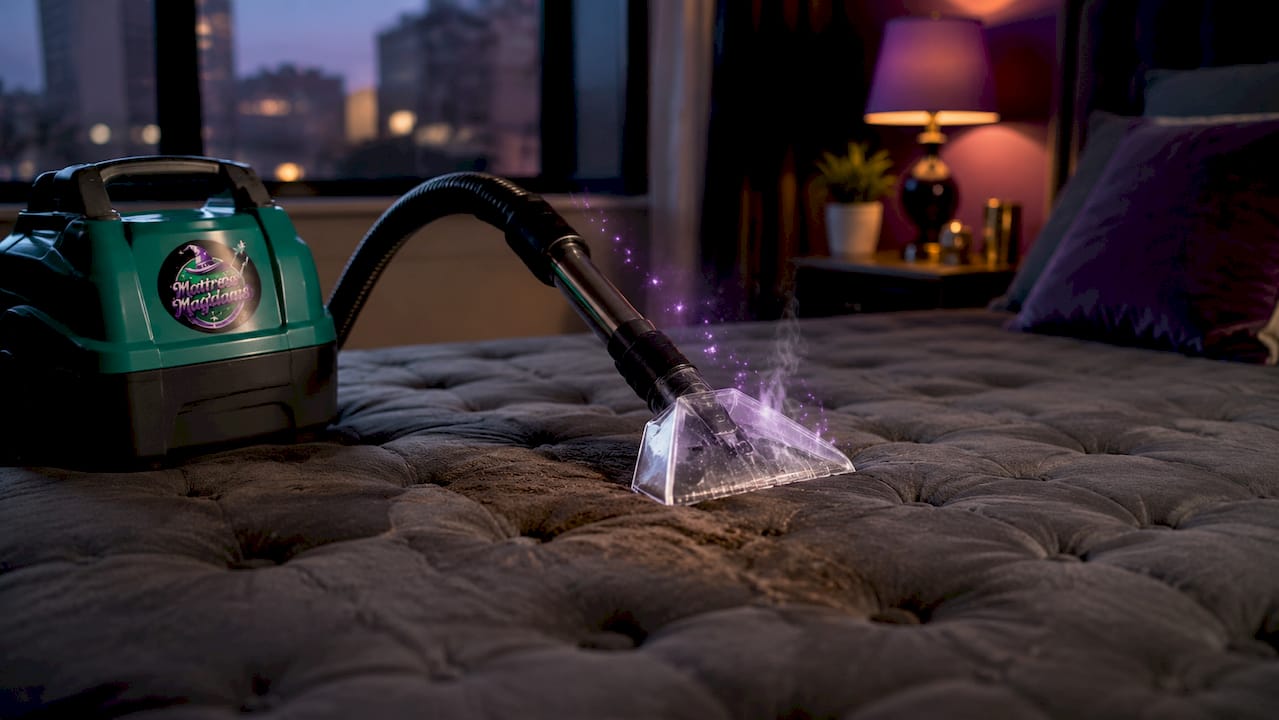
The furniture cleaning process begins with HEPA vacuuming. Standard vacuums recirculate fine particles back into the air. A true HEPA filter traps particles as small as 0.3 microns, which includes most pet dander, dust mite fragments, and mold spores. HEPA vacuuming before steam treatment removes the bulk of allergen buildup from fiber surfaces before any moisture is introduced.
Hot water extraction, often called steam cleaning, follows the vacuuming step. Professional systems heat water to between 60°C and 80°C (140°F–176°F), which is hot enough to denature allergen proteins in pet dander and dust mite waste. That protein breakdown is what separates a professional extraction from a consumer rental machine. Consumer units rarely reach or sustain the temperatures needed to achieve this effect.
Enzymatic cleaners play a separate but critical role. These products contain biological enzymes that break down organic matter at the molecular level. Pet urine, sweat, and food residue all contain proteins and fatty acids that standard detergents cannot fully dissolve. Enzymatic cleaners dissolve those compounds, which eliminates the odor source rather than masking it.
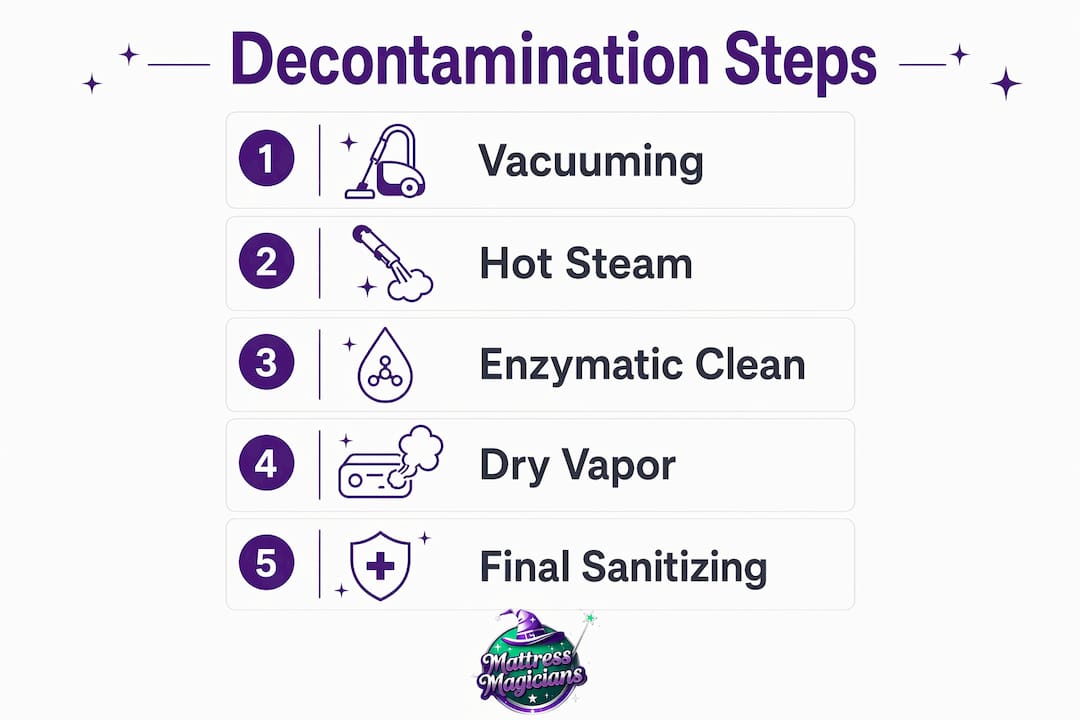
The final step is mechanical extraction and controlled drying. Leaving moisture in upholstery creates the exact conditions mold and bacteria need to grow. Professional equipment extracts water aggressively and technicians use airflow management to bring drying time down significantly.
Key methods used in professional furniture decontamination:
- HEPA vacuuming: Removes surface allergens and debris before wet treatment begins
- Hot water extraction: Uses high-temperature water to break down embedded proteins
- Enzymatic cleaning: Dissolves organic matter including urine, sweat, and food residue
- Dry vapor steam: Delivers heat without excess moisture, protecting delicate fabrics
- Disinfectant application: Reduces bacterial and viral load on contact surfaces
- Mechanical extraction: Removes water and loosened contaminants from fiber depth
Pro Tip: Ask any professional service whether their equipment uses dry vapor or wet steam. Consumer-grade wet steam leaves moisture behind, which can promote mold growth inside cushions.
How does furniture material affect the decontamination outcome?
Material porosity is the single most important factor in determining whether furniture can be fully decontaminated. Porous materials trap contaminants in deep, unreachable layers where surface cleaning cannot reach. Non-porous materials can be decisively disinfected because contaminants sit on the surface rather than absorbing into it.
Porous vs. non-porous furniture surfaces
| Surface type | Examples | Decontamination outcome |
|---|---|---|
| Porous | Upholstery, foam, unsealed wood | Deep contamination may be impossible to fully remove |
| Semi-porous | Finished wood, painted surfaces | Partial penetration; surface disinfection usually effective |
| Non-porous | Sealed metal, glass, hard plastic | Full disinfection achievable with correct products |
Upholstered sofas and foam cushions fall squarely in the porous category. Pet urine, for example, soaks through fabric and into foam within seconds. Once it reaches the foam core, ATP testing can only verify surface cleanliness. It cannot confirm what remains deeper inside. This is why severe contamination in upholstered furniture sometimes makes frame salvage and reupholstery the more practical path.
Frame salvage combined with reupholstery costs $400–$800 and is a genuine alternative to full furniture replacement, which typically runs $800–$2,500 depending on quality. Salvage is viable when contamination has not penetrated the wood or metal frame components. Professionals use bead tests and moisture meters to assess seal integrity and determine salvageability before recommending a course of action.
Using the wrong cleaning method for a given material causes its own damage. Aggressive chemicals or high-heat steam applied to composite or laminated furniture degrade sealants and strip protective finishes. pH-neutral cleaners are the correct choice for wood veneers and commercial laminates. Getting this wrong means paying to clean furniture and then paying again to repair the finish.
Pro Tip: Run a water bead test on any sealed wood surface before applying any cleaning product. If water absorbs immediately rather than beading, the seal is compromised and the surface needs to be treated as porous.
How often should you schedule professional furniture decontamination?
Cleaning frequency should match your household’s actual contamination load, not a generic calendar. Industry guidance recommends the following schedule based on household composition:
- Average household with no pets or allergy sufferers: Professional upholstery cleaning every 12 months maintains good indoor air quality and removes the gradual buildup of dust, skin cells, and environmental pollutants.
- Households with allergy sufferers: Schedule professional cleaning every 6–9 months. Allergen deposits accumulate faster than most people realize, and vacuuming alone leaves significant deposits untouched in fiber depth.
- Households with multiple pets: Professional shampooing every 3–6 months is the standard recommendation to effectively remove the proteins that trigger respiratory allergies.
Timing also matters after specific contamination events. A pet accident treated within the first hour responds far better to enzymatic cleaning than one that has dried and set over 24 hours. The proteins bond more tightly to fibers as they dry, making extraction progressively harder. Acting quickly after any contamination event dramatically improves the outcome and reduces the risk of permanent odor.
Regular professional cleaning also protects indoor air quality in a way that surface cleaning cannot. Furniture acts as a reservoir for airborne particles. Every time someone sits down, those particles get released back into the breathing zone. Consistent decontamination for upholstery breaks that cycle rather than just delaying it.
How to safely decontaminate furniture at home
DIY furniture sanitization works well for routine maintenance between professional visits. The key is using the right products and avoiding the mistakes that damage furniture or make contamination worse.
Safe home cleaning approaches for upholstered furniture include:
- White vinegar solution: Mix equal parts white vinegar and water in a spray bottle. Vinegar is mildly acidic and effective against many bacteria and odor compounds. It is safe for most fabric types when used sparingly.
- Mild dish detergent: A few drops in warm water creates a gentle cleaning solution for surface stains. Blot rather than scrub to avoid spreading the stain or pushing it deeper into fibers.
- Baking soda: Sprinkle on fabric, leave for 15–20 minutes, then vacuum with a HEPA vacuum. Baking soda absorbs odors from the surface layer effectively.
- Fabric-safe disinfectant sprays: Products labeled safe for upholstery can reduce surface microbial load. Always test on a hidden area first.
The most common DIY mistakes are using too much moisture and choosing the wrong product for the material. Soaking upholstery with a spray bottle and leaving it to air dry creates ideal conditions for mold growth inside the cushion. Harsh chemicals like bleach or ammonia-based cleaners damage fabric dyes and degrade foam. pH-neutral cleaners protect both the material and the finish.
Consumer steam cleaners present a specific risk. Wet steam from consumer units can damage upholstery and leave moisture that promotes allergen adhesion rather than removing it. Professional dry vapor systems operate at around 275°F and deliver heat without the excess moisture that causes these problems. That temperature difference is not a minor detail. It is what determines whether allergen proteins actually break down or simply get redistributed.
Pro Tip: For fabric sofas, check the manufacturer’s cleaning code tag before using any product. “W” means water-based cleaners are safe. “S” means solvent-based only. “X” means vacuum only. Ignoring this code voids most warranties and risks permanent damage.
When a contamination event involves urine, blood, or significant mold growth, professional service is the correct call. These situations require enzymatic treatment at depth, proper extraction, and controlled drying that DIY methods cannot reliably deliver. You can find additional guidance on removing pet hair and dander from soft surfaces, which applies directly to upholstered furniture as well.
For fabric sofas specifically, a step-by-step approach to cleaning fabric upholstery covers stain removal techniques that complement professional decontamination between scheduled visits.
Key Takeaways
Furniture decontamination requires matching the cleaning method to the material type, the contamination level, and the household’s specific allergen load to achieve lasting results.
| Point | Details |
|---|---|
| Three decontamination levels | Cleaning, disinfection, and sterilization serve different needs; most homes only require the first two. |
| Material porosity determines outcome | Porous surfaces like upholstery cannot always be fully decontaminated; non-porous surfaces can. |
| Professional frequency by household | Every 12 months for average homes, 6–9 months for allergy sufferers, 3–6 months with multiple pets. |
| DIY has real limits | Consumer steam cleaners leave moisture behind; professional dry vapor at 275°F breaks down allergen proteins. |
| Act fast after contamination | Treating pet accidents within the first hour produces significantly better results than waiting. |
Why I think most people underestimate what is inside their furniture
People replace mattresses when they get uncomfortable but keep sofas for 10 or 15 years without a single professional clean. That asymmetry has always struck me as backwards. A sofa in a home with two dogs and a child with seasonal allergies accumulates more biological material per square foot than most mattresses do. The difference is that the mattress is closer to your face when you sleep, so the connection to health feels more obvious.
The conversation I find myself having most often is about salvageability. Someone has a sofa they love, a pet accident has gone deep into the foam, and they want to know if it can be saved. The honest answer depends entirely on how porous the foam is, how long the contamination has been sitting, and whether the frame is structurally sound. Foam that has absorbed urine for weeks is genuinely difficult to fully decontaminate. The proteins bond, the bacteria colonize, and surface treatment does not reach the problem. In those cases, frame salvage and reupholstery is not a consolation prize. It is the smarter financial and health decision.
What I find encouraging is how much the technology has improved. Dry vapor systems at 275°F were not standard in residential service a decade ago. HEPA extraction combined with enzymatic treatment now handles contamination levels that previously required disposal. The gap between what a professional can achieve and what a consumer can do at home has widened considerably. That is not an argument against DIY maintenance. It is an argument for knowing when the situation has moved past what a spray bottle and a rented machine can fix.
The health impact of allergen reduction in soft furnishings is real and measurable. Allergy sufferers in the Twin Cities who schedule regular professional cleaning consistently report better sleep and fewer daytime symptoms. That outcome is worth planning for, not just reacting to after a crisis.
— Phillip
Mattressmagicians brings professional-grade cleaning to Twin Cities homes
Allergens, pet dander, urine, and odor do not stay in one place. What builds up in your furniture builds up in your mattress, and both affect the air you breathe every night.
Mattressmagicians serves Minneapolis, St. Paul, Woodbury, and the surrounding Twin Cities metro with professional cleaning and mattress sanitization that goes well beyond surface treatment. The team uses HEPA extraction, enzymatic treatment, and controlled drying to remove what vacuuming leaves behind. Whether you are dealing with a pet accident, seasonal allergy flare-ups, or furniture that simply has not been professionally cleaned in years, Mattressmagicians provides same-week mattress cleaning for Minneapolis-area residents. Schedule your service at mattressmagicians.com and get your home back to genuinely clean.
FAQ
What does furniture decontamination actually remove?
Furniture decontamination removes allergens, pet dander, dust mite waste, bacteria, mold spores, urine proteins, and odor compounds embedded in upholstery and foam. Surface cleaning removes visible debris; professional decontamination targets what has penetrated into fiber depth.
Can all furniture be fully decontaminated?
Non-porous surfaces like sealed metal and glass can be fully disinfected. Porous materials like upholstery and foam trap contaminants deeply, making complete decontamination impossible in severe cases without replacing the fabric or foam.
How is professional decontamination different from DIY cleaning?
Professional systems use dry vapor steam at 275°F combined with HEPA extraction to break down allergen proteins at depth. Consumer steam cleaners produce wet steam that can leave moisture behind and fail to reach the temperatures needed to denature proteins.
How often should upholstered furniture be professionally cleaned?
Cleaning frequency depends on household composition: every 12 months for average homes, every 6–9 months for allergy sufferers, and every 3–6 months in homes with multiple pets.
Is furniture decontamination the same as furniture disinfection?
Disinfection is one level within the broader decontamination process. Decontamination includes cleaning, disinfection, and in extreme cases sterilization. Most residential situations require cleaning and disinfection but not full sterilization, which is reserved for biohazard environments.

