
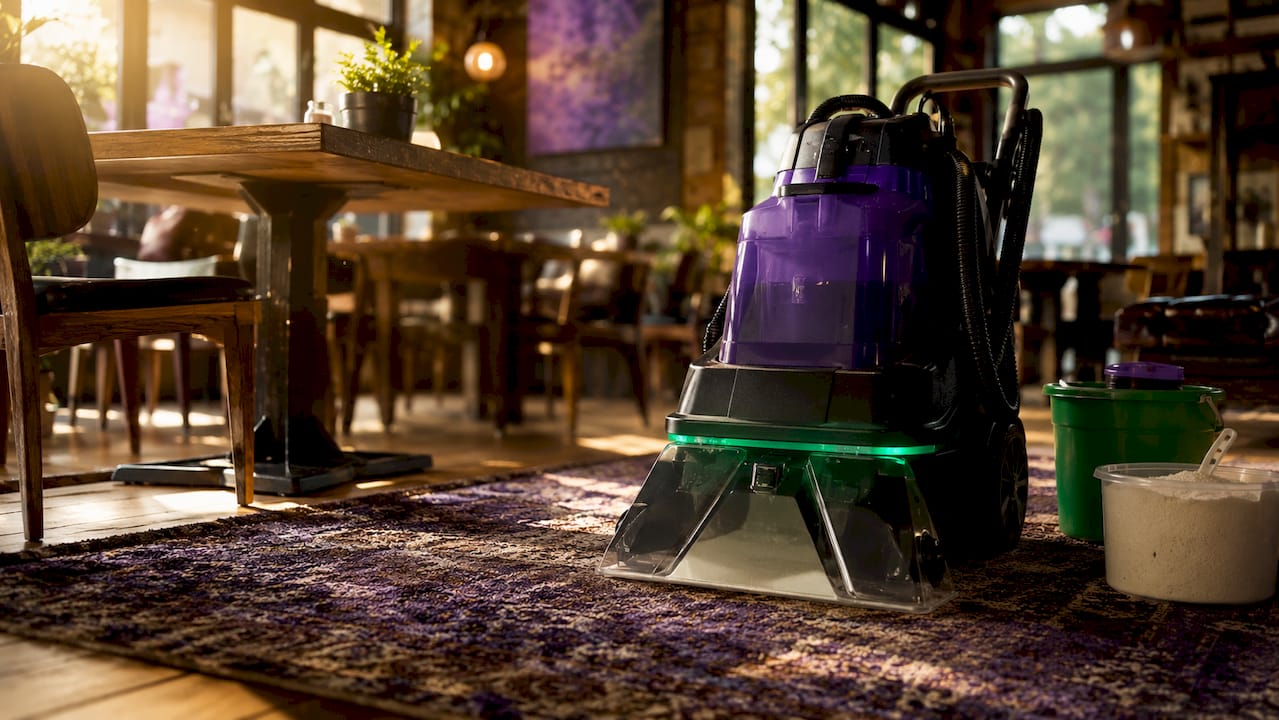
Dry extraction cleaning is a very low moisture (VLM) carpet cleaning method that uses absorbent compounds worked into carpet fibers by machine, then vacuumed out along with the dirt they’ve captured. Carpets are ready for foot traffic almost immediately, sometimes within minutes, compared to the 6–24 hour dry times typical of steam cleaning. The industry also calls this method VLM cleaning, and well-known systems include HOST, Envirodri, and Cleantec Innovation.
Here’s what sets dry extraction apart at a glance:
- Moisture level: Uses roughly 1 teaspoon of liquid per square foot, far less than wet extraction
- Dry time: Immediate to 2 hours, significantly shorter than typical hot water extraction
- Primary action: Lifts surface soil and allergens without saturating the backing or subfloor
- Best use: Routine maintenance, commercial settings, and delicate or natural fiber rugs
- Not a substitute: Does not flush deeply embedded soil, pet urine, or biological contaminants
This is not the same as steam cleaning. Dry extraction focuses on surface-level maintenance, with carpets drying in immediate to 2 hours; hot water extraction handles restorative deep cleaning and typically requires 6–24 hours to dry. Both have a place, and knowing which to reach for saves you time, money, and a lot of frustration.
What are the main dry extraction cleaning methods?
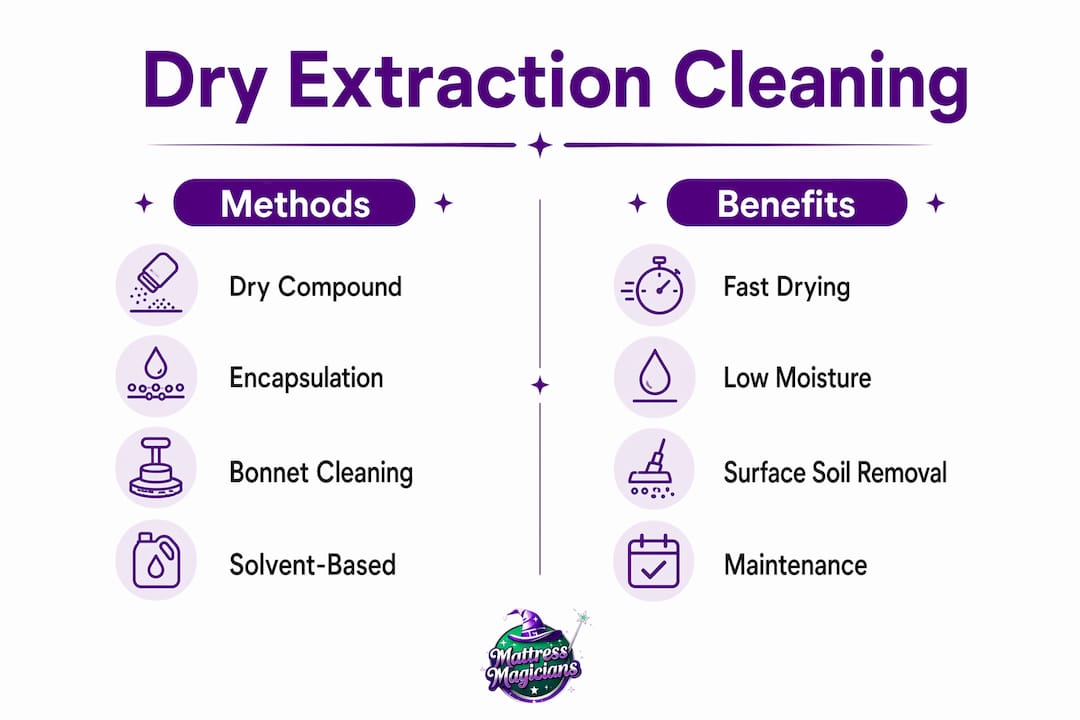
Dry extraction is an umbrella term covering several distinct techniques. Each uses minimal moisture but works differently on carpet fibers.
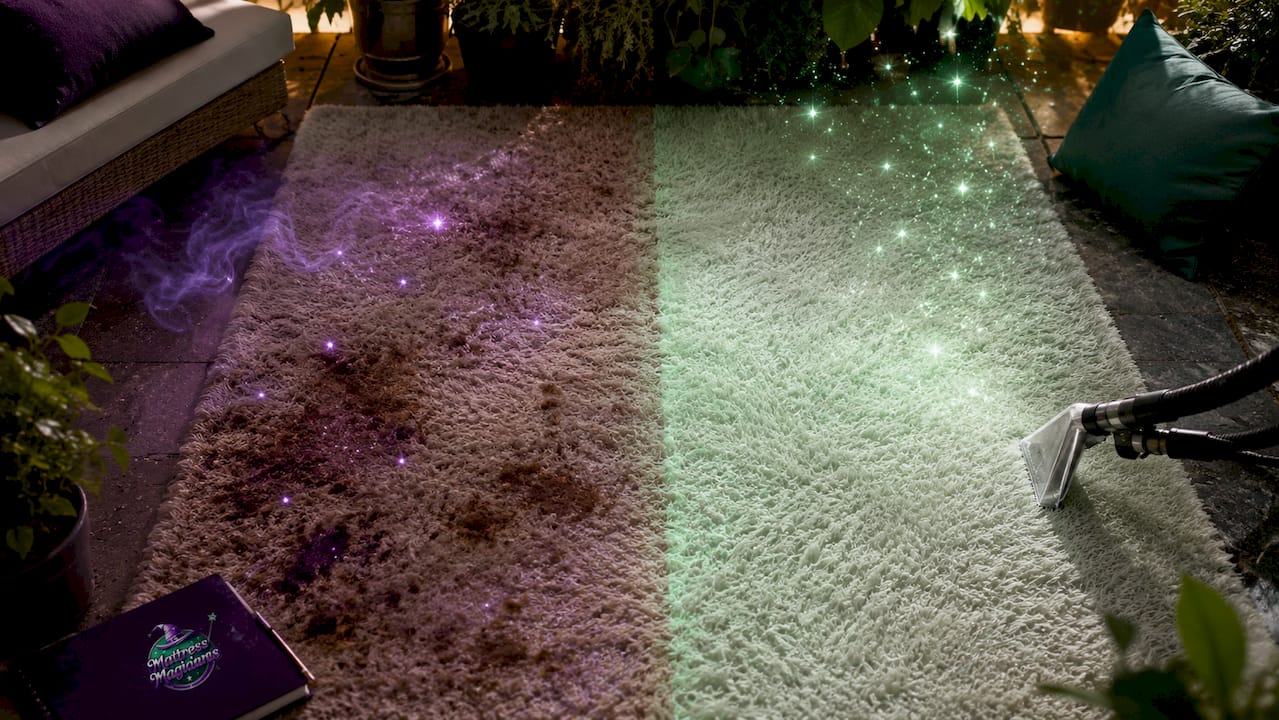
Dry compound cleaning is the most straightforward approach. An absorbent powder, often made from 98% biodegradable micro-sponges, is spread across the carpet and worked into the pile with a counter-rotating brush (CRB) machine. The compound attracts and absorbs soil, then gets vacuumed out, leaving the carpet clean and dry. HOST is the most recognized dry compound system in the U.S. market.
Encapsulation cleaning applies a polymer solution that crystallizes around soil particles on contact. Once dry, those crystalline shells are vacuumed away. According to ICS Cleaning Specialist, encapsulation improves carpet appearance compared to other systems and keeps carpets cleaner longer in high-traffic environments. The trade-off: polymer residues can build up over time if the carpet never receives a periodic hot water extraction.
Bonnet cleaning uses a round absorbent pad on a rotary buffer machine. The pad scrubs the carpet surface and lifts topsoil, reaching roughly the top 30–40% of carpet fibers. It is not strictly a dry method since it involves some moisture, but drying time is short. Bonnet cleaning works well for a quick surface refresh on commercial carpet.
Solvent-based extraction pre-sprays a d-limonene cleaner, allows a 5–10 minute dwell time, then extracts with an acid rinse through a hot water machine using triple dry strokes. Dry time runs 1–4 hours. This sits at the edge of the VLM category and cleans deeper into fibers than the other three methods.
Why dry extraction cleaning benefits your carpet
The speed advantage is real and practical. Carpets dry in roughly 1–2 hours with dry extraction, which means a hotel room, office floor, or living room is back in service the same day. For commercial properties in Minneapolis and the Twin Cities that run around the clock, that matters enormously.
Low moisture use also protects the carpet itself. Traditional wet extraction can saturate backing and subfloors, raising the risk of mold growth, fiber browning, and adhesive breakdown. Dry extraction limits damage to delicate fibers and subfloors by keeping moisture out of the equation almost entirely. Antique rugs and wool carpets, which can shrink or bleed color when wet, are particularly good candidates.
Other advantages worth knowing:
- Biodegradable compounds reduce chemical exposure for children, pets, and allergy sufferers
- Frequent maintenance cleaning is possible without degrading carpet fibers over time
- Less labor-intensive setup than wet extraction equipment
- Allergen reduction from surface-level soil and dust removal, relevant for allergy-sensitive households
- Lower equipment cost makes it accessible for routine in-house commercial maintenance
When dry extraction falls short
Dry extraction is a maintenance tool, not a restorative one. That distinction is worth taking seriously before you choose a method.
Hot water extraction is the standard for deeply embedded soil, pet urine, biological contaminants, and odors that have soaked into the carpet backing. Dry compound and encapsulation methods clean the upper portion of the fiber. They will not flush out what has migrated deep into the pile or the pad beneath. If your carpet has not been professionally cleaned in years, or if a pet accident soaked through to the subfloor, dry extraction will leave the problem largely intact.
Pro Tip: Before choosing a cleaning method, press a white cloth firmly into the carpet and lift. Light soil on the cloth means dry extraction is appropriate. Heavy, dark transfer, or any odor, signals the carpet needs hot water extraction first.
Ideal situations for dry extraction:
- Light to moderate soil on regularly maintained carpet
- Commercial environments needing fast turnaround between business hours
- Delicate or natural fiber rugs that cannot tolerate saturation
- Quick residential refresh before guests arrive
- Routine maintenance between annual deep cleans
For pet accidents on carpets or mattresses, dry methods are not enough. Urine penetrates deep and requires enzymatic treatment and hot water extraction to address both the stain and the odor source.
Dry extraction vs. steam cleaning: which one do you actually need?
Steam cleaning is the common name for hot water extraction. The process injects hot, pressurized cleaning solution deep into carpet fibers and immediately extracts it along with dislodged soil through powerful suction. It is widely regarded as the most thorough cleaning method and is recommended by many carpet manufacturers for periodic restorative cleaning.
The core differences come down to depth and time:
| Factor | Dry extraction | Hot water extraction |
|---|---|---|
| Moisture level | Very low (approx. 1 tsp/sq ft) | High |
| Cleaning depth | Upper fiber layers | Full fiber depth |
| Dry time | Immediate to 2 hours | 6–24 hours |
| Best for | Maintenance, light soil | Heavy soil, allergens, odors |
| Mold risk | Very low | Moderate if poorly extracted |
| Fiber damage risk | Low | Low to moderate |
Dry cleaning suits light to moderate soil with minimal downtime, while hot water extraction handles moderate to heavy soil for restorative results. For carpets dealing with allergens and dust mites, hot water extraction flushes contaminants that surface methods leave behind. For a carpet that just needs to look fresh before a showing or a busy Monday morning, dry extraction wins on speed every time.
The two methods work best together. Many commercial cleaning programs use dry extraction weekly for maintenance and schedule hot water extraction quarterly or annually for a full reset.
What experts get wrong about dry extraction carpet cleaning
The biggest misconception is that dry extraction is moisture-free. Every effective VLM system uses some liquid. The distinction is control: dry extraction uses drastically less moisture than wet methods, which is what protects fibers and subfloors. Calling it “dry” refers to the result, not the process.
A second misunderstanding involves encapsulation. Many people assume it cleans as deeply as hot water extraction because the polymer solution penetrates the fiber. It does not. Encapsulation is an efficient maintenance method that requires periodic deep cleaning to prevent polymer residue buildup that can eventually degrade carpet fibers.
Pro Tip: If you use encapsulation regularly, schedule a hot water extraction at least once a year to flush residue and reset the carpet’s baseline cleanliness.
Dry extraction is also not a substitute for sanitization. Carpets and mattresses harboring dust mites, mold spores, or bacteria need a method that kills and flushes those contaminants, not just lifts surface soil. For carpet cleaning and allergen control, pairing dry maintenance with periodic professional deep cleaning gives the best long-term result.
Industry guidance consistently recommends diagnosing carpet condition before selecting a method. A carpet that looks dirty on the surface may have deeply embedded grime that dry extraction will not touch. A carpet in good shape that just needs a refresh is a perfect candidate for VLM cleaning.
Mattressmagicians can handle what dry extraction cannot
Dry extraction keeps carpets looking good between deep cleans. But when the problem goes deeper, whether that’s a urine stain, a pet accident, embedded odors, or years of sweat and allergen buildup in a mattress, you need professional restorative cleaning.
Mattressmagicians serves Minneapolis, St. Paul, Woodbury, and the surrounding Twin Cities metro with professional mattress cleaning that goes well beyond surface maintenance. From sanitization and allergen reduction to stain and odor removal, the work is done on-site, on your schedule, without the hassle of replacement.
Book same-week service at mattressmagicians.com and wake up to a cleaner, fresher bed.
Key Takeaways
Dry extraction cleaning is a very low moisture maintenance method that lifts surface soil quickly, but hot water extraction remains the standard for deep, restorative carpet and mattress cleaning.
| Point | Details |
|---|---|
| VLM method, not moisture-free | Dry extraction uses minimal liquid, roughly 1 tsp per sq ft, not zero moisture. |
| Fast dry times | Carpets are usable in immediate to 2 hours, versus 6–24 hours for steam cleaning. |
| Maintenance, not restoration | Dry extraction cleans upper fiber layers; embedded soil and odors need hot water extraction. |
| Encapsulation needs follow-up | Polymer residue builds up over time; schedule annual hot water extraction to prevent buildup. |
| Diagnose before you choose | Press a white cloth to the carpet first; heavy soil transfer means dry extraction is not enough. |
FAQ
What is dry extraction cleaning, exactly?
Dry extraction cleaning is a very low moisture carpet cleaning method that uses absorbent compounds worked into carpet fibers by machine, then vacuumed out along with the captured soil. Carpets dry in immediate to 2 hours, making it ideal for maintenance cleaning with minimal disruption.
Is dry extraction cleaning effective for pet stains and odors?
No. Dry extraction removes surface soil but cannot flush pet urine or biological contaminants that have soaked into carpet backing. Hot water extraction, combined with enzymatic treatment, is required for effective pet stain and odor removal.
How does dry extraction differ from steam cleaning?
Dry extraction uses very low moisture and cleans the upper fiber layers, with a dry time of immediate to 2 hours. Steam cleaning, properly called hot water extraction, injects hot pressurized water deep into fibers and extracts it with powerful suction, giving a deeper clean but requiring 6–24 hours to dry.
Can dry extraction remove allergens from carpets?
Dry extraction reduces surface-level allergens and dust by lifting them into the absorbent compound. For deeper allergen removal, including dust mites and embedded contaminants, hot water extraction is more effective.
How often should you use dry extraction cleaning?
Dry extraction works well as a regular maintenance method, monthly or quarterly depending on traffic, with hot water extraction scheduled at least once a year to flush residue and deeply embedded soil.

