
TL;DR:
- Using a waterproof mattress protector with a TPU membrane effectively prevents over 95% of liquid stains on mattresses. Regular maintenance, including deep cleaning every three to four months and immediate treatment of biological stains, extends mattress life and preserves warranties. Professional cleaning is recommended when stains have set, odors persist, or routine methods are no longer effective.
Mattress stain prevention methods are the set of protective practices and physical barriers that stop spills, sweat, urine, and biological fluids from penetrating mattress fibers. A waterproof mattress protector is the single most effective tool, capable of blocking 95% or more of common liquid staining events before they reach the mattress surface. For homeowners, renters, and property managers in the Twin Cities, getting these methods right also protects mattress warranties, controls allergens, and extends the life of an expensive investment.
What are the best stain prevention methods for mattresses?
The most effective stain prevention strategy combines a waterproof protector with a consistent maintenance routine. No single product does the job alone. Understanding each layer of protection helps you build a system that actually holds up against pet accidents, sweat, and spills.
Waterproof mattress protectors: the primary barrier
A waterproof mattress protector is not the same as a mattress pad or topper. Pads offer comfort but provide zero liquid barrier protection. Only a protector with a waterproof membrane stops fluids from reaching the mattress. This distinction matters enormously for warranty compliance. Most mattress manufacturers void warranties the moment biological stains appear on the mattress itself.
The best protectors use a breathable TPU (thermoplastic polyurethane) membrane. TPU membranes block liquid penetration without trapping heat or creating the plastic-sheet crinkle that makes cheaper protectors uncomfortable. That means you get full protection without sacrificing sleep quality. For Airbnb hosts and property managers running high-turnover properties in Minneapolis or St. Paul, a TPU protector is non-negotiable.
Pro Tip: Buy two protectors per mattress. Rotate them at laundry time so the mattress is never left unprotected between washes.
How protectors compare to pads and toppers
| Feature | Waterproof protector | Mattress pad | Mattress topper |
|---|---|---|---|
| Liquid barrier | Yes | No | No |
| Allergen reduction | Yes | Partial | No |
| Warranty protection | Yes | No | No |
| Added comfort | Minimal | Moderate | High |
| Washable | Yes | Usually | Rarely |
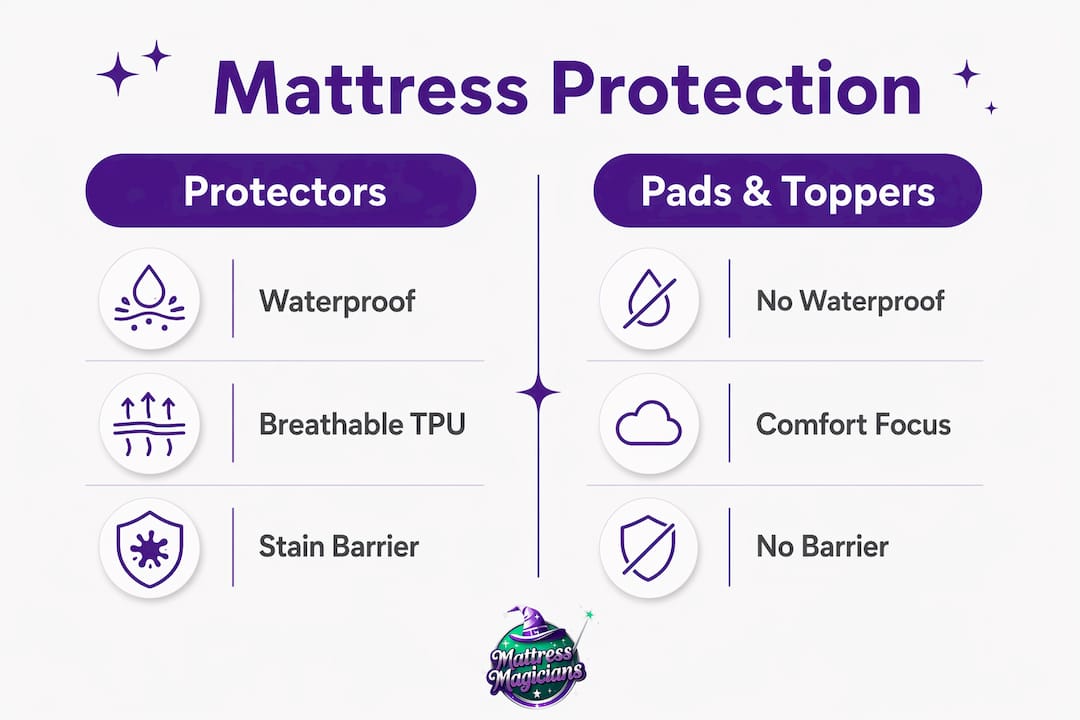
The table makes the hierarchy clear. A topper adds comfort but offers no protection. A pad sits in the middle but does not prevent stains. A waterproof protector is the only layer that does the actual protective work.
What regular maintenance routines support effective stain prevention?
Prevention is not a one-time purchase. It requires a repeating schedule that keeps the mattress clean, dry, and free of allergen buildup. Skipping this routine is how mattresses develop odors and permanent staining even when a protector is in place.
Follow this maintenance cycle:
- Wash bedding weekly in hot water. Hot water kills dust mites and removes sweat residue before it soaks through to the protector. Weekly hot water washing is the minimum standard for effective allergen control.
- Deep clean the mattress every 3–4 months. Strip the bed, vacuum the mattress surface with an upholstery attachment, and sprinkle baking soda across the entire surface. Let it sit for at least one hour before vacuuming it up. This cycle removes odor, absorbs residual moisture, and resets the surface hygiene.
- Rotate the mattress every 3–4 months. Regular rotation promotes air circulation and prevents moisture from concentrating in one area. Trapped moisture from sweat or improper cleaning leads to mold and mildew over time.
- Air the mattress after washing. After removing the protector for laundering, let the mattress breathe for at least 30 minutes before replacing the protector. This step prevents moisture from being sealed in.
Pro Tip: Set a phone reminder every 90 days labeled “mattress day.” It takes less than 20 minutes and prevents the kind of buildup that requires professional intervention.
For renters and property managers handling multiple units, this schedule also protects against the slow accumulation of allergens that trigger complaints from tenants with asthma or dust mite sensitivities. Mattressmagicians offers allergen removal services for properties where buildup has already taken hold.
How do you treat biological stains before they become permanent?
Speed is the defining factor in biological stain removal. Treating urine, blood, or sweat within 5–10 minutes dramatically increases the chance of full removal. Waiting until the stain dries changes the chemistry of the problem entirely.
The core rules for immediate stain treatment:
- Blot, never rub. Rubbing spreads the stain and pushes it deeper into fibers. Use a clean white cloth and press straight down to absorb as much liquid as possible.
- Use cold water only. Heat denatures the proteins in biological stains, bonding them permanently to fibers. Hot water, steam, or a hair dryer will make the stain impossible to remove without professional equipment.
- Apply an enzyme cleaner. Enzyme-based cleaners break down the protein molecules in urine, blood, and sweat. For fresh stains, apply and blot after 10 minutes. For dried stains, enzyme cleaners need 30–60 minutes of dwell time to work effectively.
- Avoid over-wetting the mattress. The biggest cleaning mistake is applying too much liquid. Excess moisture penetrates deep into the mattress core and creates the conditions for mold growth. Use a spray bottle rather than pouring liquid directly.
- Never use bleach on a mattress. Bleach degrades foam and fiber integrity and leaves a chemical residue that irritates skin and airways.
The “blot and cold water” rule is the most commonly violated in a panic situation. Pet owners in particular tend to reach for hot water or a steam cleaner, which locks the odor compounds into the mattress permanently. For stains that have already dried and set, a safe stain removal guide can walk you through the right approach before calling in a professional.
What practical tips optimize mattress stain protection?
Getting the details right separates a mattress that lasts a decade from one that needs replacing in three years. These tips apply whether you are protecting a single bedroom mattress or managing a short-term rental property with multiple beds.
- Layer in the correct order. The right sequence is mattress, then protector, then pad, then sheet. Incorrect layering places the pad between the protector and the mattress, which allows liquids to bypass the waterproof barrier entirely.
- Choose a breathable protector. A protector that traps heat causes sweating, which increases moisture on the mattress surface and defeats the purpose of protection. TPU membrane protectors breathe while still blocking liquids.
- Use baking soda for odor control between deep cleans. Baking soda absorbs odors and neutralizes perspiration residue. Sprinkle it on, leave it for 15–30 minutes, then vacuum it up. This works well for the monthly refresh between quarterly deep cleans.
- Use a mattress-safe sanitizing spray after stain treatment. Once a stain is treated and the area is dry, a light application of a mattress-safe sanitizing spray kills bacteria and reduces odor. Avoid alcohol-heavy sprays that can degrade foam.
- Wash the protector every 2–4 weeks. A protector that is never washed accumulates sweat, skin cells, and allergens on its surface. Washing it regularly keeps the barrier effective and the sleep surface hygienic.
For Airbnb hosts and property managers in Woodbury, Minneapolis, and surrounding Twin Cities areas, these steps also reduce guest complaints and protect the property’s review rating. A stained or odorous mattress is one of the most common triggers for negative hospitality reviews.
Key Takeaways
The most effective mattress stain prevention system combines a waterproof TPU protector, a consistent 3–4 month maintenance cycle, and immediate cold-water enzyme treatment for biological stains.
| Point | Details |
|---|---|
| Use a waterproof protector | A TPU membrane protector blocks 95%+ of liquid stains and preserves mattress warranties. |
| Layer accessories correctly | Place the protector directly on the mattress, under the pad and sheet, to maintain the liquid barrier. |
| Follow a 3–4 month cleaning cycle | Deep vacuum, deodorize with baking soda, and rotate the mattress to prevent moisture and allergen buildup. |
| Treat stains within 5–10 minutes | Use cold water, blotting, and an enzyme cleaner to remove biological stains before they bond to fibers. |
| Never apply heat to protein stains | Hot water and steam permanently set urine, blood, and sweat into mattress fibers. |
What I’ve learned after seeing hundreds of mattresses up close
After working with mattresses across the Twin Cities, the pattern I see most often is not dramatic neglect. It is small, consistent mistakes that compound over time.
The most common one: people buy a mattress pad thinking it protects the mattress. It does not. A pad adds cushioning. A waterproof protector adds protection. These are different products solving different problems, and confusing them costs people hundreds of dollars in mattress replacement.
The second most common mistake is over-wetting during a DIY cleaning attempt. Someone finds a urine stain, panics, and pours water or cleaning solution directly onto the mattress. The liquid soaks into the core, the mattress never fully dries, and mold starts growing inside where you cannot see it. By the time the odor becomes obvious, the damage is deep. This is exactly when DIY methods stop being enough.
The third thing I notice is that most people have no maintenance routine at all. They wash their sheets but never touch the mattress itself. Dust mites, sweat residue, and allergens accumulate for years. For anyone with allergies or asthma in the household, that buildup is a real health issue, not just a hygiene preference.
The good news is that all three of these problems are preventable with the right protector, the right technique, and a quarterly schedule. And when prevention has not been enough, professional cleaning restores what DIY cannot.
— Phillip
When professional cleaning makes sense for your mattress
Prevention handles most situations. But when stains have set, odors have penetrated the core, or a mattress has gone years without professional attention, DIY methods reach their limit.
Mattressmagicians provides on-demand professional mattress cleaning across Minneapolis, St. Paul, Woodbury, and the broader Twin Cities metro. The service covers deep stain extraction, biological stain and urine removal, odor elimination, and allergen reduction. For property managers and Airbnb hosts running high-turnover properties, Mattressmagicians also handles bulk cleaning requests with same-week scheduling. If your mattress has reached the point where a protector and baking soda are not enough, professional restoration is the next step before replacement.
FAQ
What is the most effective method to prevent mattress stains?
A waterproof mattress protector with a TPU membrane is the most effective single method. It blocks 95% or more of liquid staining events before they reach the mattress surface.
Does a mattress pad protect against stains?
No. A mattress pad adds comfort but provides no liquid barrier. Only a waterproof protector prevents stains and preserves mattress warranty coverage.
How quickly should you treat a urine or blood stain?
Treat biological stains within 5–10 minutes for the best removal results. Use cold water and an enzyme cleaner. Never apply heat, which permanently bonds protein stains to mattress fibers.
How often should you deep clean a mattress?
Experts recommend a deep cleaning cycle every 3–4 months, including vacuuming with an upholstery attachment and deodorizing with baking soda for at least one hour.
When should you call a professional instead of cleaning the mattress yourself?
Call a professional when stains have dried and set, odors persist after DIY treatment, or the mattress has not been professionally cleaned in over a year. Mattressmagicians serves the Twin Cities with same-week availability for exactly these situations.

