
TL;DR:
- Maintaining consistent sleep schedules, a clean bedroom environment, and a allergen-free mattress are essential for improving sleep quality. Building habits gradually and addressing environmental factors help establish long-term sleep health. If sleep problems continue after several weeks of good practices, consulting a sleep specialist is recommended.
A sleep hygiene checklist is a practical set of daily habits and environmental adjustments designed to improve your sleep quality and protect your long-term health. The term “sleep hygiene” was coined by sleep researcher Peter Hauri in the 1970s, and it remains the foundation of evidence-based sleep medicine today. About 30.5% of U.S. adults get less than 7 hours of sleep per night. That shortfall compounds over time, affecting mood, immunity, and cognitive performance. One factor most people overlook entirely is mattress hygiene. A dirty, allergen-laden mattress can undermine even the most disciplined bedtime routine. This guide gives you a complete, evidence-based checklist to improve sleep quality from every angle.
1. What belongs on your sleep hygiene checklist first
The single most effective habit on any sleep hygiene checklist is a fixed sleep and wake time, seven days a week. Consistent sleep schedules train your circadian rhythm, the internal 24-hour clock that regulates nearly every biological process. Irregular schedules create “social jet lag,” a state where your body clock and your actual schedule are misaligned, making it harder to fall asleep and harder to wake up feeling rested.
Start your checklist with these non-negotiable anchors before adding anything else. The National Sleep Foundation recommends 7–9 hours for adults aged 18–64 and 7–8 hours for adults 65 and older. Count backward from your required wake time to set a fixed bedtime, then protect it like any other appointment.
2. Daily behavioral habits that improve sleep quality
Behavioral habits form the backbone of any sleep hygiene improvement guide. The following practices directly influence how quickly you fall asleep and how deeply you stay asleep.
- Set a consistent wake time. Wake at the same time every day, including weekends. This is the single fastest way to stabilize your sleep drive.
- Build a 60-minute wind-down routine. A relaxing pre-bed routine signals your nervous system to shift from alert to rest. Reading, light stretching, journaling, or a warm bath all work.
- Cut caffeine by 2:00 PM. Caffeine has a half-life of roughly 5–7 hours. An afternoon coffee in Minneapolis can still be active in your bloodstream at midnight.
- Limit alcohol in the evening. Alcohol may help you fall asleep faster but fragments sleep in the second half of the night, reducing restorative slow-wave sleep.
- Avoid large meals within 2–3 hours of bed. Digestion raises core body temperature and keeps your system active when it should be winding down.
- Time your exercise wisely. Morning or afternoon exercise deepens sleep. Vigorous workouts within 2 hours of bedtime can delay sleep onset for some people.
- Limit naps to 20 minutes before 3:00 PM. Longer or later naps reduce sleep pressure and make it harder to fall asleep at night.
Pro Tip: Schedule 10–15 minutes earlier in the day as dedicated “worry time.” Write down concerns and next steps in a notebook. Offloading stress before evening reduces the bedtime rumination that keeps people staring at the ceiling.
3. How to optimize your bedroom and mattress environment
Your bedroom environment is a direct input to sleep quality, not just a backdrop. The goal is a space your brain associates exclusively with rest.
Temperature is the most underrated variable. The ideal bedroom temperature is 60–67°F. Your core body temperature naturally drops as you fall asleep, and a cool room accelerates that process. A warm shower or bath 60–90 minutes before bed creates a temperature contrast: your body heats up, then cools rapidly when you step out, triggering a strong sleep signal.
Light and noise matter more than most people realize. Blackout curtains block streetlights and early morning sun. White noise machines or earplugs reduce disruptive sounds. Even small LED indicator lights on electronics can suppress melatonin production.
Screens belong outside the bedroom. The blue light from phones and tablets delays melatonin release by up to two hours. More importantly, the mental stimulation of scrolling keeps your brain in a high-alert state that is the opposite of sleep-ready.
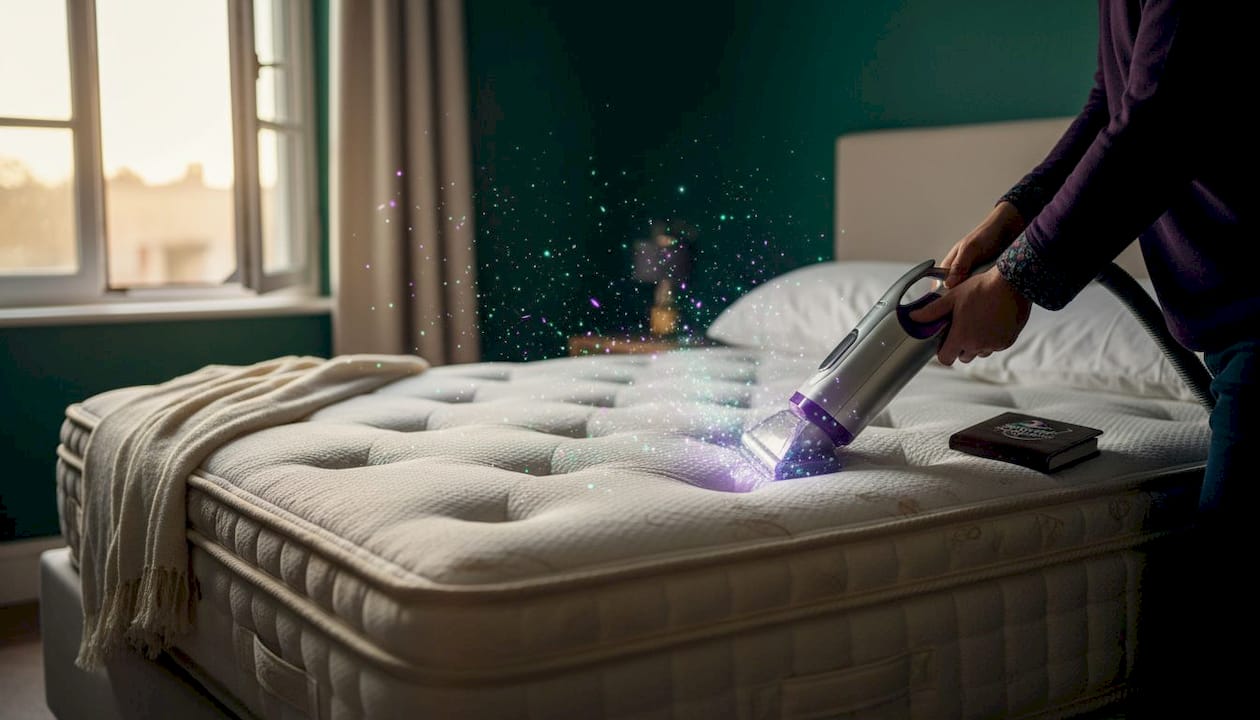
Your mattress is the most overlooked item on any sleep environment checklist. A mattress accumulates dead skin cells, sweat, dust mites, pet dander, and bacteria over time. These allergens trigger nighttime congestion, skin irritation, and disrupted breathing that fragment sleep without you ever knowing why. Professional mattress cleaning removes these contaminants at a level no vacuum or spray can match. Mattressmagicians serves Minneapolis, St. Paul, Woodbury, and the broader Twin Cities metro with on-demand mattress sanitization that restores a genuinely clean sleep surface.
Here is a quick reference for the bedroom environment checklist:
| Environment factor | Target standard | Why it matters |
|---|---|---|
| Room temperature | 60–67°F | Supports natural body temperature drop for sleep onset |
| Lighting | Blackout or near-dark | Prevents melatonin suppression |
| Noise level | Below 30 decibels | Reduces micro-arousals during light sleep stages |
| Screen presence | None in bedroom | Eliminates blue light and mental stimulation |
| Mattress condition | Clean, allergen-free | Reduces nighttime congestion and skin irritation |
Pro Tip: Pair your bedroom environment adjustments with your wind-down routine. Dim the lights at the same time you start your pre-bed routine. Your brain will begin associating that light level with sleep, reinforcing the signal every night. For families looking to reduce allergens at the source, eco-friendly sleep environment practices make a measurable difference.
4. Signs your sleep hygiene needs work
Poor sleep hygiene produces recognizable patterns. Recognizing them early prevents a temporary problem from becoming a chronic one.
- You take more than 20 minutes to fall asleep most nights. Occasional difficulty is normal. Consistent difficulty is a signal.
- You rely on caffeine to function during the day. Caffeine compensates for poor sleep but does not replace it.
- You feel alert at bedtime but exhausted in the morning. This pattern often indicates a delayed circadian rhythm caused by inconsistent schedules or late light exposure.
- You wake frequently during the night. Fragmented sleep can result from temperature issues, noise, allergens, or alcohol consumption.
- You nap daily to get through the afternoon. Regular napping to compensate for nighttime sleep is a sign the nighttime sleep itself is insufficient or poor quality.
Sleep hygiene is a preventive and supportive practice. It is not a treatment for clinical insomnia. Research confirms that sleep hygiene alone is insufficient for chronic insomnia disorder. The American Academy of Sleep Medicine identifies multi-component cognitive behavioral therapy for insomnia (CBT-I) as the preferred treatment. If your sleep problems persist after 4–6 weeks of consistent sleep hygiene practice, consult a sleep specialist or your primary care physician.
Mattress condition can compound these issues silently. Dust mites and allergens cause nighttime congestion and micro-arousals that you may not consciously register. If you have addressed your behavioral habits and environment but still sleep poorly, your mattress surface deserves a hard look. Improving home air quality through professional cleaning of both carpets and mattresses reduces the allergen load that disrupts sleep.
5. How to build a personalized bedtime routine checklist that sticks
A checklist only works if you actually use it. The most common mistake is building a list of 15 habits and trying to adopt them all at once. That approach fails within two weeks for most people.
Start with three foundational habits: a fixed wake time, a caffeine cutoff, and a 30-minute wind-down routine. Add one new item every two weeks once the first three feel automatic. Foundational habits before advanced techniques is the sequence that produces lasting results.
Daily checklist items (habits to practice every day):
- Wake at the same time regardless of how well you slept.
- Get natural light within 30 minutes of waking.
- Stop caffeine by 2:00 PM.
- Begin wind-down routine 60 minutes before bed.
- Keep the bedroom at 60–67°F.
- Put your phone outside the bedroom or in airplane mode.
Weekly checklist items (habits to review or maintain each week):
- Wash pillowcases and sheets.
- Assess whether your mattress needs spot cleaning or a professional refresh.
- Review your sleep log and note patterns.
- Adjust bedtime or wake time if you are consistently under 7 hours.
Sustained behavioral changes produce measurable improvements in sleep quality. Brief interventions improve perceived sleep quality, but the real gains come from consistency over weeks and months. Track your sleep in a simple notebook or a basic sleep tracking app. Note your bedtime, wake time, and a 1–10 quality rating each morning. Patterns emerge quickly.
Pro Tip: Avoid the “all or nothing” trap. Missing one night of your routine does not erase your progress. Treat your checklist as a default, not a rule. Returning to it the next day is what matters, not perfection.
Reserve your bed only for sleep and intimacy. Working, scrolling, or watching TV in bed trains your brain to associate the mattress with wakefulness. If you cannot fall asleep within 20 minutes, get up, do something calm in dim light, and return when you feel sleepy. This technique, called stimulus control, is one of the most evidence-backed tools in sleep medicine.
For practical strategies you can apply tonight, the sleep quality guide from Mattressmagicians covers environment and comfort adjustments in detail.
Key takeaways
Consistent sleep and wake times, a clean sleep environment, and a mattress free of allergens form the three pillars of effective sleep hygiene that produce lasting improvements in sleep quality.
| Point | Details |
|---|---|
| Fix your schedule first | A consistent wake time is the fastest way to stabilize your circadian rhythm. |
| Cool your bedroom | Keep room temperature between 60–67°F to support natural body temperature drop at sleep onset. |
| Clean your mattress | Allergens and dust mites in mattresses fragment sleep silently; professional cleaning removes them. |
| Build gradually | Add one new checklist habit every two weeks to avoid burnout and increase long-term adherence. |
| Know the limits | Sleep hygiene supports good sleep but does not treat chronic insomnia; CBT-I is the clinical standard. |
What I have learned from years of watching people overlook the obvious
Most people who struggle with sleep have already read the standard advice. They know about screens, caffeine, and consistent bedtimes. What they have not done is actually implement those habits at the same time, consistently, for more than a week. The gap between knowing and doing is where sleep problems live.
The habit I see skipped most often is the mattress itself. People will buy a $60 white noise machine and $40 blackout curtains, then sleep on a mattress that has not been cleaned in three years. Dust mites, sweat residue, and accumulated allergens create a low-grade inflammatory environment that disrupts sleep without producing any obvious symptom you can point to. You just wake up feeling less rested than you should.
The other mistake I see constantly is treating sleep hygiene as a sprint. Someone reads an article, adopts eight habits on Monday, and abandons six of them by Thursday. Sleep hygiene is a long-term practice, not a detox. The people who sleep well consistently are not doing anything exotic. They are doing a few basic things every single day without negotiating with themselves about it.
Start with your wake time and your mattress. Those two changes alone will show you what is possible before you add anything else.
— Phillip
A cleaner mattress is part of the checklist too
Your behavioral habits and bedroom setup can only do so much if the surface you sleep on is working against you. Mattressmagicians provides professional mattress cleaning, sanitization, and allergen removal for homeowners, renters, and short-term rental hosts across Minneapolis, St. Paul, Woodbury, and the Twin Cities metro.
The service removes dust mites, bacteria, sweat buildup, stains, and odors at a depth that household cleaning cannot reach. Same-week appointments are available for Minneapolis residents. Whether you need a full mattress sanitization service or targeted stain and odor removal, Mattressmagicians handles it without the hassle of replacement. Visit mattressmagicians.com to schedule your service.
FAQ
What is a sleep hygiene checklist?
A sleep hygiene checklist is a structured list of daily habits and environmental adjustments proven to improve sleep quality. It covers consistent sleep schedules, pre-bed routines, bedroom conditions, and mattress cleanliness.
How long does it take for sleep hygiene to work?
Most people notice improvement in sleep onset and morning alertness within 2–4 weeks of consistent practice. Measurable, sustained improvements require ongoing behavioral changes, not short-term fixes.
What bedroom temperature is best for sleep?
The National Sleep Foundation recommends 60–67°F as the ideal bedroom temperature for adults. Cooler temperatures support the natural drop in core body temperature that triggers sleep onset.
Can a dirty mattress affect sleep quality?
A mattress accumulates dust mites, allergens, and bacteria that cause nighttime congestion and micro-arousals. Professional mattress cleaning removes these contaminants and can meaningfully improve sleep comfort and quality.
When should I see a doctor about sleep problems?
Consult a physician or sleep specialist if sleep difficulties persist after 4–6 weeks of consistent sleep hygiene practice. Chronic insomnia requires CBT-I or medical evaluation, not just behavioral adjustments.

