
TL;DR:
- A monthly mattress check involves vacuuming, visual inspection, and odor testing to identify problems early. Prompt detection of mold, bed bugs, or deep impressions guides necessary cleaning or replacement, preventing further damage. Encasements, regular bedding washing, and professional services help maintain mattress health and hygiene over time.
A monthly mattress check is a short inspection routine covering vacuuming, visual scanning for stains and mold, and a quick sniff test for odors. Do it every month and you catch problems early, protect your warranty, and cut down on allergens that accumulate faster than most people expect. Dust mites thrive in mattress fibers, and a zippered encasement is the single most effective barrier against them. Mattressmagicians handles the cases that go beyond a monthly refresh for homeowners, renters, and property managers across Minneapolis, St. Paul, Woodbury, and the wider Twin Cities.
Quick TL;DR:
- Vacuum the entire surface and seams with an upholstery attachment
- Look for stains, mold spots, moisture, and structural sagging
- Note any red flags (persistent odor, visible mold, body impressions deeper than 1.5 inches) and escalate to professional cleaning or replacement
Table of Contents
- What does the monthly mattress check procedure actually involve?
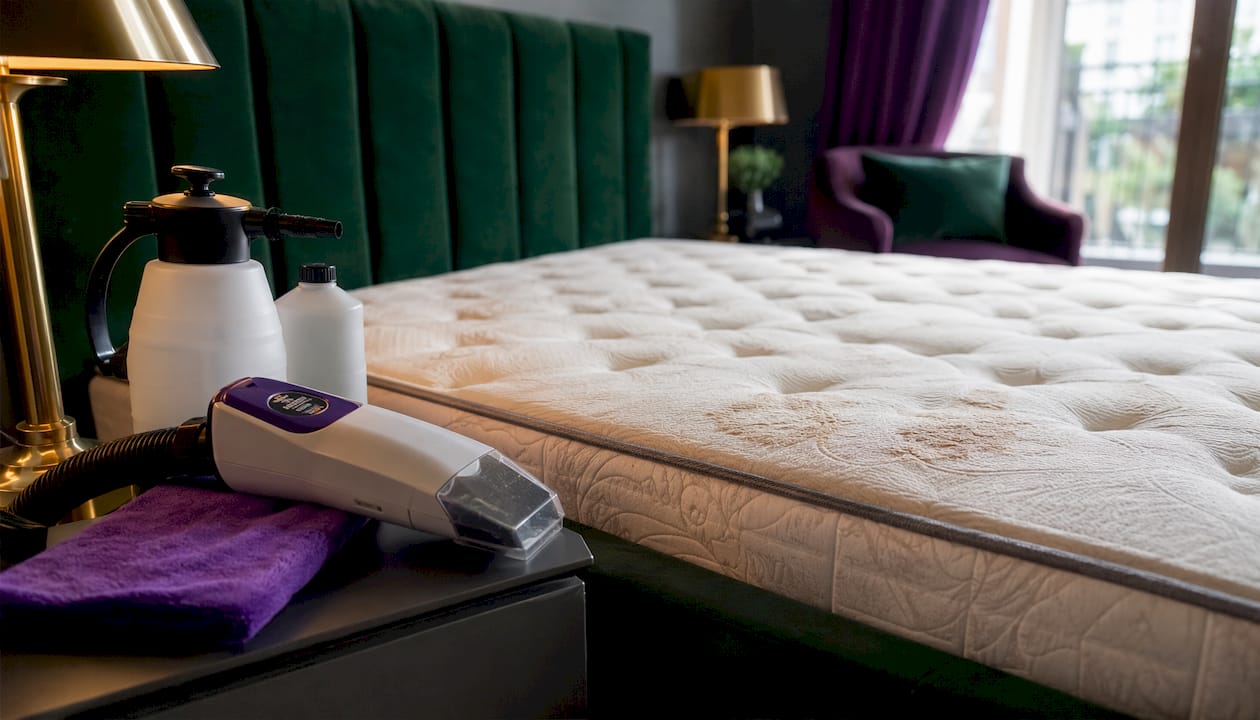
- What are the red flags to look for during each inspection?
- Which DIY treatments are safe to use during a monthly check?
- When should you clean it yourself, call a pro, or replace it?
- How do you prevent problems between monthly checks?
- How should property managers log and track mattress inspections?
- How do you prepare for a professional mattress cleaning visit?
- Key Takeaways
- What Twin Cities techs actually see most often
- When it’s time to call Mattressmagicians
- Useful sources
- FAQ
What does the monthly mattress check procedure actually involve?
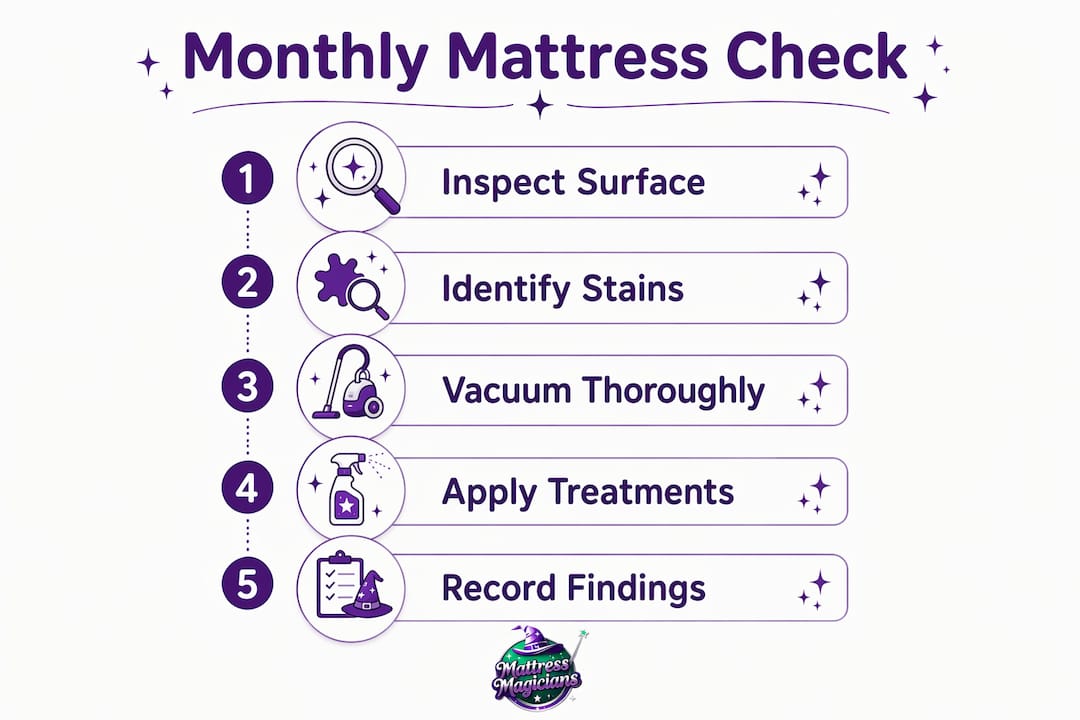
The monthly inspection process runs in five sequential steps. Budget a short amount of time on a weekend morning when you are already stripping the bed.
-
Strip all bedding (1–2 min). Remove sheets, pillowcases, and the mattress protector. Toss them in the wash on the hottest cycle safe for the fabric. Hot water kills dust mites more reliably than warm.
-
Vacuum seams and surface (3–5 min). Use the upholstery attachment on a HEPA vacuum. Work the seams first, then long overlapping strokes across the surface. Flip the mattress if it is double-sided and repeat. Memory foam and hybrid mattresses need lighter suction pressure than innerspring models to avoid pulling at the cover.
-
Visual and odor inspection (2–3 min per side). Scan for stains, discoloration, mold spots, and any dark specks near seams. Lean in and smell the surface. A faint musty note after airing is a yellow flag; a persistent earthy odor is a red one.
-
Baking soda treatment (optional, 15 min–8 hrs). Sprinkle a thin, even layer and let it sit. A quick 15-minute dwell helps with light surface odors. For real moisture absorption, baking soda needs 3–8 hours minimum. Vacuum it off completely before replacing bedding.
-
Rotate (as needed). Foam, latex, and newer innerspring mattresses benefit from periodic rotation every several months; older innerspring models need rotation more frequently within that same general timeframe. Zoned-design mattresses should not be rotated. Log the date so you are not guessing next month.
Pro Tip: Take a photo of any new stain or soft spot before you treat it. Timestamped photos are your best evidence if a warranty claim comes up later.
What are the red flags to look for during each inspection?
Most monthly checks turn up nothing alarming. When they do, here is what each finding means.
- Visible mold (any amount). Mold on a mattress surface usually signals moisture has reached the core. Persistent musty odors that don’t resolve after airing and enzyme treatment indicate deep-set contamination that cannot be remediated. Replace the mattress.
- Blood spots or dark fecal specks near seams. These are classic bed-bug indicators. Rust-colored smears on sheets, tiny black dots along piping, or actual bites on skin all warrant immediate action. Isolate the mattress, call an exterminator, and contact a professional cleaning service.
- Body impressions deeper than a moderate depth. A mattress showing 1.5-inch body impressions needs replacement. Shallower soft spots may just need rotation.
- Seam tears or loose cover fabric. Check seams and edges carefully. Also inspect the bed frame and headboard for loose bolts or misaligned slats, since frame damage accelerates mattress wear.
- Moisture or damp patches. Press your palm flat against the surface. Any cool or damp feeling means moisture has penetrated the cover. Air the mattress with windows open and a fan running before replacing bedding.
Property managers: Log each finding with unit number, date, inspector name, and a photo. That record protects you in tenant disputes and supports warranty claims.
Pro Tip: Bed bugs are not always visible. Check the sheets for rust-colored smears and the mattress piping for tiny dark specks before assuming the mattress is clear.
Which DIY treatments are safe to use during a monthly check?
Stick to three tools: a HEPA vacuum, baking soda, and an enzyme cleaner. Everything else introduces more risk than it solves.
What works:
- Blot fresh stains immediately with a clean cloth. Never rub.
- Apply an enzyme cleaner to protein stains (urine, blood, sweat). Let it dwell for 10–15 minutes before blotting. Quick wiping usually fails because the enzymes need time to break down organic proteins.
- Use baking soda for odor and light moisture. Three to eight hours is the effective range.
- For a full step-by-step walkthrough, the easiest way to clean a mattress at home covers the complete process.
What to avoid:
- Bleach and ammonia break down foam layers and leave chemical residues that shorten mattress life.
- Saturating the mattress with liquid. Foam cores trap moisture and grow mold from the inside out.
- Steam cleaners that soak the core. Surface steam is fine; anything that drives moisture deep is not.
- Heavily scented sprays. They mask odors without removing them and can irritate allergy sufferers.
The safe stain removal guide covers specific stain types in more detail if you run into something stubborn.
When should you clean it yourself, call a pro, or replace it?
The decision comes down to three tiers.
-
DIY is fine when the stain is fresh, enzyme-cleanable, and the odor clears after treatment and airing. Budget 20–90 minutes plus full drying time (several hours minimum).
-
Call a professional when odors persist after enzyme treatment and airing, when staining is biological and extensive, or when you need documentation for a rental unit. A monthly refresh handles surface buildup well; a professional deep clean adds controlled dwell time and drying that DIY cannot match. Mattressmagicians offers same-week service across the Twin Cities.
-
Replace the mattress when you see visible mold, when musty odors persist after airing and enzyme treatment, or when body impressions exceed 1.5 inches. Most mattresses last several years with regular care.
One warranty note: visible biological stains can void stain-free warranty clauses. If your mattress is still under warranty, document the stain with photos and contact the manufacturer before attempting aggressive treatment.
How do you prevent problems between monthly checks?
Prevention cuts deep-cleaning frequency significantly. The highest-leverage step is installing a zippered mattress encasement. Unlike a top-side pad, a full encasement blocks dust mites and liquid penetration on all six sides. For rental units and allergy-prone households, it is the single best investment you can make.
- Wash bedding regularly in hot water at a temperature recommended to kill dust mites reliably.
- Use a mattress protector under the encasement for an extra liquid barrier
- Control bedroom humidity, especially during Minnesota summers when indoor moisture spikes and hidden mold risk rises in mattress cores
- Rotate per manufacturer schedule and log the date
- For Airbnb and short-term rentals, extending bedding lifespan through protector layering and frequent washing reduces turnover costs noticeably
Pro Tip: For rental units, install encasements on every mattress before the first tenant moves in. Replacing an encasement costs a fraction of replacing a mattress, and it makes monthly checks faster because you are inspecting the encasement, not the mattress itself.
How should property managers log and track mattress inspections?
Pair monthly checks with linen changes so the inspection happens naturally during turnover. Batch-photograph all flagged units in one walkthrough, then schedule professional service for urgent cases within the same week.
| Unit | Date | Inspector | Findings | Photos | Recommended Action | Follow-Up Date |
|---|---|---|---|---|---|---|
| — | — | — | None | N | None | Next month |
| — | — | — | Stain, odor | Y | Pro cleaning | Within 1 week |
| — | — | — | Mold visible | Y | Replace | Immediate |
- Flag units with biological staining or persistent odor for same-week professional service in Minneapolis or St. Paul
- Log recurring contracted cleanings in the same sheet so you have a full service history per unit
- Mattressmagicians offers onsite cleaning for apartment buildings with bulk scheduling and landlord documentation
For a full pre-occupancy workflow, the guide on preparing mattresses for new residents covers the complete turnover process.
How do you prepare for a professional mattress cleaning visit?
A little prep cuts onsite time and gets better results.
- Strip all bedding and remove it from the room
- Clear a 3-foot path around the bed on both sides
- Unplug adjustable bases if present
- Write down every stain location, its approximate age, and any DIY treatments you have already tried
- Note whether you used bleach or ammonia (the tech needs to know)
Expect 2–6 hours of drying time after a professional clean. A box fan pointed at the mattress and an open window cuts that significantly. Schedule the visit for a morning so the mattress is dry by bedtime. For apartment buildings, Mattressmagicians coordinates batch scheduling to minimize unit downtime across multiple units in the same visit.
Pro Tip: Never put sheets back on a damp mattress. Even a slightly moist surface can develop mold within 24–48 hours, especially in a closed bedroom during a humid Minnesota summer.
Key Takeaways
A consistent monthly mattress care routine catches problems early, protects warranties, and reduces the need for costly deep cleans or premature replacement.
| Point | Details |
|---|---|
| Monthly check time | The full inspection and vacuum takes 10–15 minutes; add baking soda for 3–8 hours if odors are present. |
| Replacement threshold | Body impressions deeper than 1.5 inches or visible mold that persists after treatment means it’s time to replace the mattress, not clean it. |
| Encasement first | A zippered encasement is the highest-leverage prevention investment, blocking dust mites and liquid on all sides. |
| Warranty protection | Visible biological stains can void stain-free warranty clauses; photograph and document before treating. |
| Mattressmagicians | For persistent odors, biological staining, or rental turnover in the Twin Cities, Mattressmagicians offers same-week professional service. |
What Twin Cities techs actually see most often
The cases that come up most in Minneapolis and St. Paul are pet urine and moisture-related odor, and the two often arrive together. A pet accident soaks through the cover and into the foam core, and in a humid Minnesota summer that moisture lingers long after the surface looks dry. By the time a homeowner calls, the odor has been building for weeks.
Monthly checks catch this early. A fresh urine stain treated with an enzyme cleaner the same day is a 30-minute fix. A stain that has been sitting since last month is a professional job. Spring and early summer are the busiest seasons for odor calls, which tracks with humidity spikes. Property managers who set up recurring service contracts before May avoid the backlog entirely.
When it’s time to call Mattressmagicians

DIY goes a long way, but some problems need more than baking soda and a vacuum. Mattressmagicians is the Twin Cities’ on-demand mobile mattress cleaning service for exactly those moments: persistent odors that survive enzyme treatment, biological staining from pets or accidents, visible mold, or rental units that need documentation and a fast turnaround.
Services cover professional mattress cleaning, sanitization, stain and urine removal, and odor removal across Minneapolis, St. Paul, Woodbury, and surrounding metro areas. Same-week appointments are available. Book online at mattressmagicians.com or call to confirm availability for your address.
Useful sources
- Sleep Foundation: How to Take Care of Your Mattress
- Good Housekeeping: How to Clean a Mattress
- Mattress Review Authority: Mattress Care and Maintenance
- MattressHelp.org: How to Clean a Mattress 2026
- Mattressmagicians: Professional Mattress Cleaning Service
Save photos, receipts, and service records. Manufacturers and landlords both ask for documentation, and a timestamped photo from your monthly check is often the difference between a covered warranty claim and a denied one.
FAQ
How long does a monthly mattress check take?
The core inspection and vacuum takes 10–15 minutes. Add 3–8 hours if you apply baking soda for odor absorption.
What body impression depth means it’s time to replace?
A mattress with body impressions deeper than 1.5 inches should be replaced, no matter its age.
Can you use bleach to clean a mattress stain?
No. Bleach and ammonia break down foam layers and leave residues that shorten mattress life. Use an enzyme cleaner with a 10–15 minute dwell time instead.
How do you know if a mattress has bed bugs?
Look for rust-colored smears on sheets, tiny dark fecal specks along mattress seams, and unexplained bites on skin. Visual inspection alone can miss early infestations.
When should you call a professional instead of DIY?
Call a pro when odors persist after enzyme treatment and airing, when staining is extensive or biological, or when you need documented service records for a rental unit. Mattressmagicians serves the Twin Cities with same-week availability.

