
TL;DR:
- Maintaining consistent wake times and morning light exposure are crucial for improving sleep quality in busy professionals. Environmental factors, such as clean mattresses and proper room temperature, significantly influence restorative sleep. Small, strategic habits outweigh rigid routines for sustainable sleep improvement during hectic schedules.
Healthy sleep habits for busy people are strategic routines and environmental adjustments that make restorative rest possible despite a packed schedule. The American Academy of Sleep Medicine defines adequate sleep as 7 or more hours per night for adults, yet most professionals consistently fall short. Poor sleep does not just make you tired. It cuts reaction time, weakens decision-making, and raises long-term health risks. The good news is that a few well-placed habits, not a perfect bedtime ritual, are enough to change your sleep quality. Mattressmagicians works with Twin Cities professionals every day who discover that a cleaner sleep environment is one of the fastest wins they can make.
1. Healthy sleep habits for busy people start with a fixed wake time
A consistent wake time is the single most powerful anchor for your circadian rhythm. Getting up within 15 minutes of your usual time every day, including weekends, stabilizes your sleep-wake cycle even when your bedtime shifts. That stability means your body knows when to start winding down the night before, which makes falling asleep faster and easier.
Busy professionals often focus on bedtime, but wake time is the real lever. Your bedtime can flex by 30 to 60 minutes without much damage. Your wake time should not flex at all if you can help it.
- Keep your alarm set to the same time 7 days a week
- Allow bedtime to shift slightly on late work nights rather than sleeping in the next morning
- Treat your wake time as a non-negotiable anchor, not a preference
Pro Tip: Set your wake alarm and a second “wind-down” alarm 45 minutes before your target bedtime. The second alarm does the scheduling work so you do not have to think about it.
2. How morning light exposure locks in your sleep-wake cycle
Light is your body’s primary clock signal. 10–30 minutes of bright outdoor light within the first hour after waking anchors your internal clock and improves nighttime sleep quality. Even on overcast Minnesota mornings, outdoor light is significantly brighter than indoor lighting and delivers the signal your brain needs.
This habit costs nothing and takes no extra time if you pair it with something you already do. Walk to your car without sunglasses. Drink your coffee on the porch. Step outside during a morning call.
Evening light works in the opposite direction. Blue light from screens suppresses melatonin production and delays sleep onset. A calm and dark bedroom promotes melatonin release and prepares your body for sleep.
- Get outside within 60 minutes of waking, even for 10 minutes
- Dim overhead lights after 8:00 PM
- Use blackout curtains or an eye mask to block streetlight and early sunrise
- Put your phone face-down or in another room at least 30 minutes before bed
- Switch to warm-toned bulbs in your bedroom and living room for evening hours
3. Meal timing and caffeine rules that protect your sleep
What you eat and when you eat it directly affects sleep depth. Stopping full meals approximately 3 hours before bedtime reduces digestive activity during sleep and supports deeper, more restorative rest. For a 10:30 PM bedtime, that means finishing dinner by 7:30 PM.
Late meetings and long commutes make this hard. When you cannot avoid eating late, choose light, easy-to-digest options like a small bowl of oatmeal, a banana, or yogurt rather than a full meal. Your digestive system will thank you at 2:00 AM.
Caffeine has a half-life of roughly 5 to 6 hours in most adults. A 3:00 PM coffee still has meaningful caffeine in your bloodstream at 9:00 PM.
- Cut caffeine by 2:00 PM at the latest, or earlier if you are sensitive
- Avoid alcohol within 3 hours of bedtime; it fragments sleep in the second half of the night even if it helps you fall asleep initially
- Stay consistently hydrated throughout the day to avoid waking up thirsty at night
- If you need something warm before bed, try herbal tea like chamomile or peppermint
Pro Tip: If you regularly work late and eat dinner after 8:00 PM, shift your caffeine cutoff to noon. The adjustment feels rough for three days and then becomes your new normal.
4. Wind-down routines that transition a busy mind into sleep
A deliberate wind-down period signals your brain to shift from active task mode to rest. A 10–30 minute transition routine reduces resistance to sleep by calming the nervous system and clearing mental clutter. The content of the routine matters less than its consistency. Your brain learns the sequence and starts releasing sleep signals when you begin it.
Aerobic exercise within two hours of bedtime raises core body temperature and releases endorphins, both of which interfere with sleep onset. Finish hard workouts by 7:00 PM if your bedtime is around 10:00 PM. Gentle stretching or yoga is fine closer to bed.
Room temperature matters more than most professionals realize. Keeping your bedroom near 68°F helps your body drop its core temperature, which is a required step for sleep onset. A room that is too warm delays this process and fragments sleep.
- Choose one or two low-stimulation activities: reading a physical book, light stretching, a warm shower, or quiet music
- Avoid emotionally charged conversations or work emails in the 30 minutes before bed
- Set your thermostat to 65–68°F before you start your wind-down
- Keep your phone out of arm’s reach or in another room entirely
- Write down tomorrow’s top three priorities before you close your laptop
Pro Tip: Writing down specific next-day tasks before bed offloads mental load and prevents your brain from rehearsing problems at 1:00 AM. A five-minute brain dump beats 45 minutes of lying awake.
Many busy professionals also find that cleaning services and work-life balance go hand in hand. A tidy, calm home environment makes the wind-down transition significantly easier.
5. How to manage naps, night awakenings, and schedule disruptions
Naps are a legitimate recovery tool, but timing and length determine whether they help or hurt. Limit naps to 15–20 minutes and finish them before 3:00 PM. A nap longer than 30 minutes pushes you into deeper sleep stages, which leaves you groggy and reduces sleep pressure at night.
Middle-of-the-night awakenings are normal, and it can take up to 30 minutes to fall back asleep without any underlying problem. The anxiety about being awake at 3:00 AM is often more disruptive than the waking itself. Recognizing this prevents a normal event from becoming a stressful one.
Busy schedules create unavoidable bad nights. The key is having a fallback plan so one rough night does not spiral into a week of poor sleep.
- If you cannot fall asleep after 20 minutes, get out of bed and do something quiet until you feel sleepy. Lying awake in bed trains your brain to associate the bed with wakefulness
- On late work nights, shift your bedtime later rather than your wake time earlier
- Use your fixed wake time as the anchor that resets everything the next morning
- Plan a short nap the day after a bad night rather than sleeping in
- Keep a simple fallback routine ready: dim lights, no screens, light reading until drowsy
6. Your sleep environment is doing more work than you think
Sleep hygiene is about shaping your environment so rest happens naturally, not forcing sleep through willpower. Most busy professionals focus entirely on behavior and ignore the physical space where sleep happens. That is a significant-missed opportunity.
Dust mites, allergens, and odors in a mattress directly affect sleep quality. They trigger nasal congestion, skin irritation, and nighttime coughing that fragments sleep without you ever identifying the cause. For professionals in Minneapolis and St. Paul, where windows stay closed for months during winter, indoor allergen levels build up faster than most people expect. Reviewing your bedroom allergen sources is a practical step that most sleep guides skip entirely.
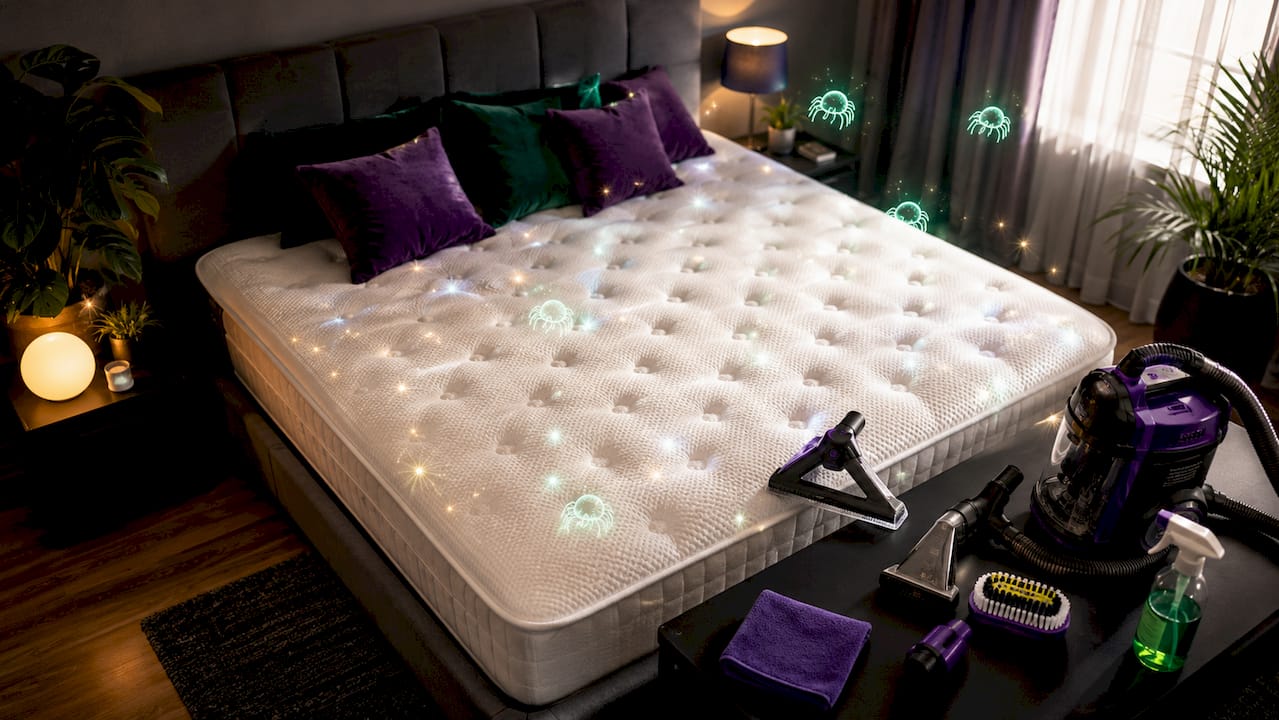
A clean mattress is not a luxury. It is part of the sleep environment that determines whether your other habits actually pay off. Pairing good behavioral habits with a clean, fresh sleep surface gives your body the best possible conditions for restorative rest. The Mattressmagicians team serves the Twin Cities with professional mattress cleaning that removes allergens, odors, and buildup that standard vacuuming cannot reach.
Key Takeaways
Healthy sleep for busy professionals depends on a few consistent anchors, not a perfect nightly ritual, and the physical sleep environment matters as much as behavior.
| Point | Details |
|---|---|
| Fix your wake time | Wake at the same time every day, including weekends, to stabilize your circadian rhythm. |
| Get morning light | Step outside within 60 minutes of waking for 10–30 minutes to anchor your internal clock. |
| Cut caffeine early | Stop caffeine by 2:00 PM to clear it from your system before a 10:00 PM bedtime. |
| Use a wind-down routine | A 10–30 minute pre-sleep routine signals your brain to shift from task mode to rest. |
| Clean your sleep environment | Allergens and odors in your mattress fragment sleep; professional cleaning removes what vacuuming misses. |
What I’ve learned about sleep habits that actually survive a busy week
The advice that sounds most responsible, strict bedtimes, no screens ever, eight hours minimum, is also the advice most likely to fail a working professional. Rigid systems collapse the first time a client dinner runs late or a deadline pushes past midnight. What survives is a small set of non-negotiable anchors. Busy professionals benefit most from a few anchors rather than complex ritual lists, and I have found that to be true in practice.
The two anchors I would never give up are a fixed wake time and morning light. Everything else can flex. Bedtime can shift. The wind-down can be five minutes instead of thirty. But if I wake at the same time and get outside within an hour, my sleep quality stays consistent even through rough weeks.
The other thing most guides miss is the physical environment. You can do everything right behaviorally and still sleep poorly if your mattress is loaded with dust mites, pet dander, or odors you have stopped noticing. I have seen this pattern repeatedly with professionals in the Twin Cities who invest in sleep tracking apps and blackout curtains but never address what they are actually sleeping on. A cleaner sleep surface is one of the highest-leverage, lowest-effort changes you can make. It does not require a new habit. It just requires one service call.
Start with the anchors. Protect your environment. Give yourself permission to be imperfect on the rest.
— Phillip
A fresher mattress is part of your sleep routine too
Your sleep habits can only do so much if the surface you sleep on is working against you. Dust mites, sweat buildup, and allergens accumulate in mattresses over time, and they disrupt sleep in ways that are easy to overlook.
Mattressmagicians provides professional mattress cleaning in Minneapolis and across the Twin Cities, including St. Paul, Woodbury, and surrounding areas. Our mobile service comes to you, removes allergens and odors at the source, and leaves your mattress genuinely clean without the hassle of replacement. If you are building better sleep habits, a professionally cleaned mattress is the foundation worth starting with. Book your service at mattressmagicians.com.
FAQ
How many hours of sleep do busy professionals actually need?
The American Academy of Sleep Medicine recommends 7 or more hours per night for adults. Consistently sleeping less than 7 hours impairs cognitive performance and decision-making regardless of how productive you feel.
What is the fastest way to fall asleep faster at night?
A fixed wake time combined with morning light exposure is the most reliable way to accelerate sleep onset. These two habits regulate your circadian rhythm so your body builds natural sleep pressure by bedtime.
Is it okay to nap if you did not sleep well the night before?
A 15–20 minute nap before 3:00 PM is a practical recovery tool after a bad night. Naps longer than 30 minutes or taken too late in the day reduce nighttime sleep pressure and make the next night harder.
Does a dirty mattress actually affect sleep quality?
Yes. Allergens, dust mites, and odors in a mattress trigger congestion and irritation that fragment sleep without an obvious cause. Professional cleaning removes buildup that regular vacuuming cannot reach.
What should I do if I wake up in the middle of the night and cannot fall back asleep?
Stay calm and give yourself up to 30 minutes before acting. If you are still awake after 20 minutes, get out of bed and do something quiet in dim light until you feel drowsy, then return to bed.

