
TL;DR:
- Green cleaning in bedrooms involves using non-toxic, plant-based products to reduce allergens and chemical irritants. It improves indoor air quality and sleep health by targeting dust mites, pet dander, mold, pollen, and VOC residues through consistent routines. Professional mattress cleaning complements surface efforts by removing deep-seated allergens that DIY methods cannot reach.
Green cleaning in bedrooms is defined as the practice of using non-toxic, plant-based, and low-VOC products alongside consistent allergen-control habits to reduce biological and chemical irritants in your sleeping space. The role of green cleaning in bedrooms goes far beyond surface tidiness. Nearly 30% of allergy sufferers report significant symptom improvement after switching to low-VOC products and consistent allergen-control routines. Your bedroom is where you spend roughly a third of your life, and the air quality there directly shapes how well you sleep, breathe, and recover. This guide gives you the science, the routines, and the tools to make that space genuinely healthier.
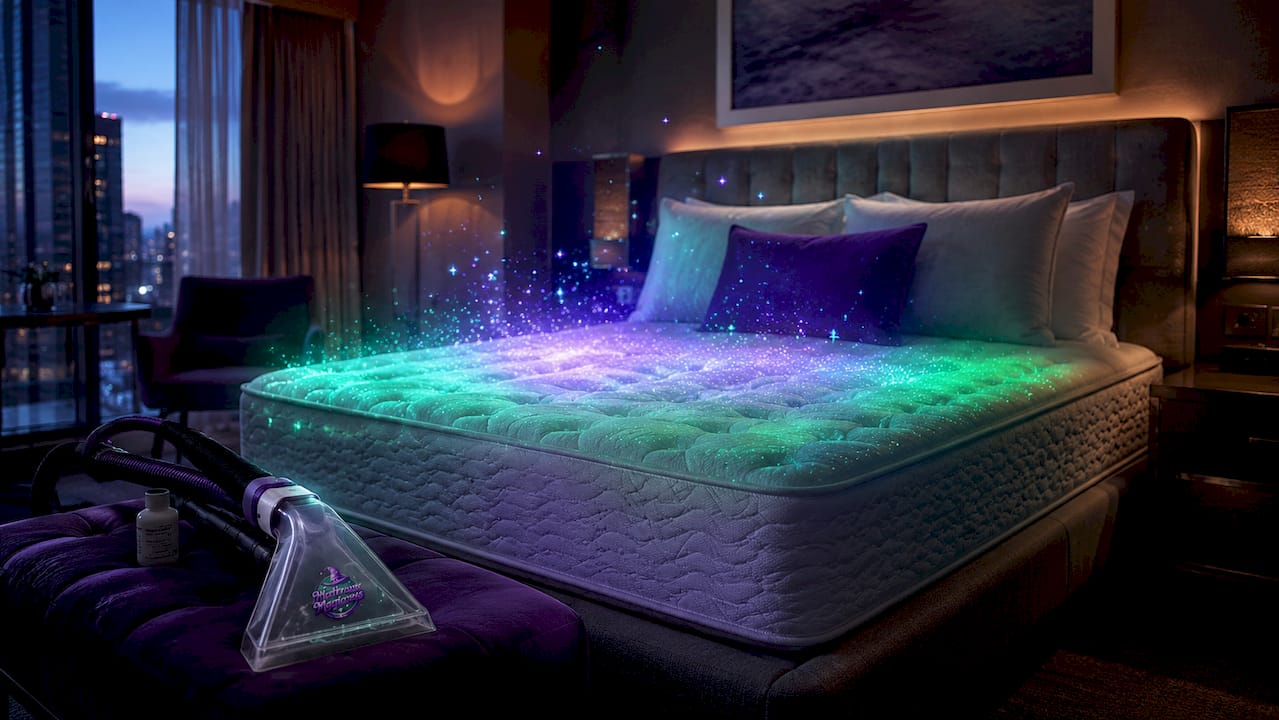
How does green cleaning reduce allergens and chemical irritants in bedrooms?
The bedroom concentrates more allergens per square foot than almost any other room in your home. Dust mites live in mattresses, pillows, and carpets. Pet dander settles on every surface. Mold spores thrive in humid corners. Conventional cleaning products add a second layer of harm by releasing volatile organic compounds, or VOCs, into the air you breathe while you sleep.
The bedroom offers the highest return on health investment for allergen interventions. That means the effort you put into eco-friendly bedroom cleaning here pays off more than the same effort applied anywhere else in your home. Green cleaning targets both problems at once: it physically removes biological allergens while avoiding the chemical residues that conventional products leave behind.
Plant-derived enzymatic cleaners break down organic molecules without leaving VOC-heavy residues. This matters because VOCs from conventional sprays and disinfectants accumulate in enclosed bedroom environments overnight, when windows are closed and ventilation is minimal. Switching to plant-based formulas cuts that accumulation at the source.
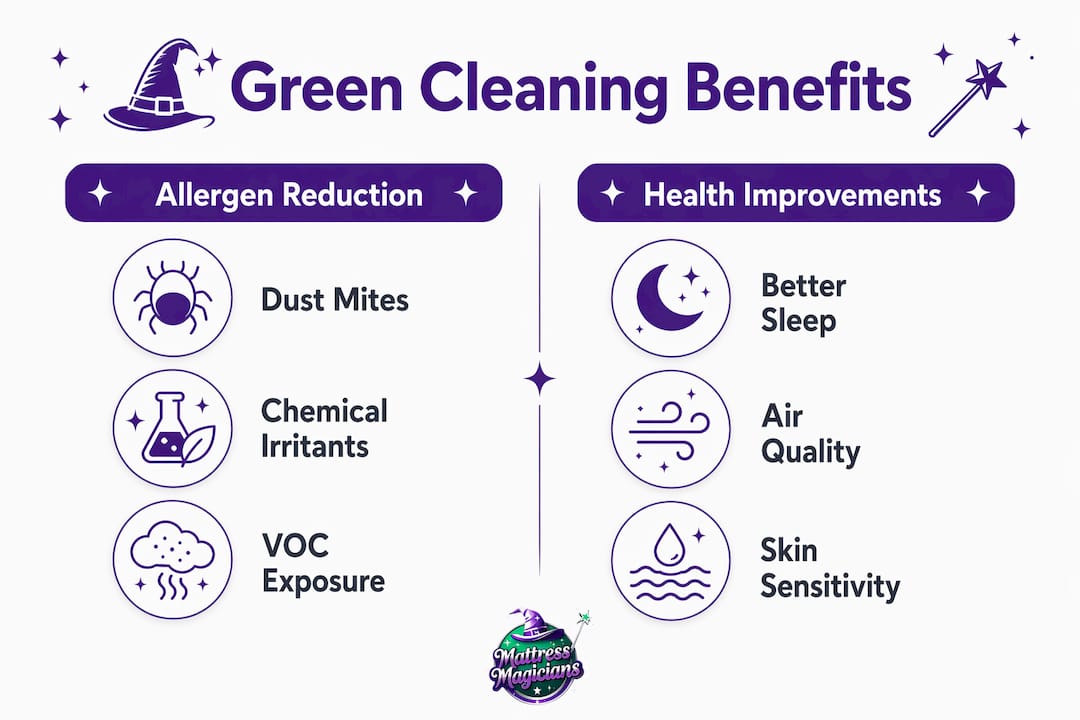
Green cleaning targets the following allergen categories in bedrooms:
- Dust mites: Found in mattresses, pillows, carpets, and upholstered furniture
- Pet dander: Microscopic skin flakes that cling to bedding and soft surfaces
- Mold spores: Thrive in humid corners, window tracks, and under-bed spaces
- Pollen: Tracked in on clothing and bedding, settles on all surfaces
- Chemical irritants: VOC residues from synthetic cleaning sprays and air fresheners
Pro Tip: When selecting green cleaning products, look for the EPA Safer Choice label or third-party certifications like EWG Verified. These designations confirm low-VOC formulas that won’t trade one irritant for another.
What are the best green cleaning habits for a healthy bedroom?
Consistency beats intensity every time. Choosing plant-based, low-VOC products encourages higher cleaning consistency, which is the actual driver of long-term allergen reduction. A deep clean once a month surrounded by weeks of neglect leaves allergen levels far higher than a simple daily and weekly routine.
Daily habits that make a real difference
Open a window for at least 10 minutes each morning to flush overnight VOC buildup. Use a damp microfiber cloth to wipe down nightstands and hard surfaces rather than dry dusting, which just redistributes particles into the air. A quick spritz of a diluted white vinegar solution on hard surfaces handles light disinfection without synthetic chemicals.
Weekly tasks that control the biggest allergen sources
Washing bedding at 130°F or higher with high-heat drying for at least 15 minutes kills dust mites effectively. This is the single most impactful weekly task for allergy sufferers. Follow that with HEPA vacuuming of your mattress surface, carpets, and upholstered furniture to capture the fine particles that standard vacuums recirculate.
A sample weekly green cleaning schedule:
- Monday: Wash all bedding at 130°F or higher; high-heat dry for 15 minutes
- Wednesday: HEPA vacuum mattress, carpets, and upholstered surfaces
- Thursday: Damp-wipe all hard surfaces with a microfiber cloth and plant-based spray
- Friday: Clean bathroom and bedroom floors with a plant-based floor cleaner
- Saturday: Wipe down window sills, blinds, and ceiling fan blades
- Sunday: Air out the room for 20 minutes; check humidity levels
Monthly and seasonal tasks
Clean curtains or fabric blinds monthly, since they trap pollen and dander that falls back into the room with every breeze. Check and clean window tracks, which are hidden allergen reservoirs that most people miss entirely. Inspect mattress and pillow encasements for tears or gaps that allow allergens to reach the sleep surface.
Pro Tip: Replace open shelving and under-bed storage boxes with sealed bins. Switching to sealed bins under the bed significantly reduces hidden allergen loads that routine cleaning never reaches.
How does green cleaning affect indoor air quality and sleep health?
VOCs accumulate during sleep because bedroom ventilation drops to near zero when windows are closed at night. Conventional cleaning products applied earlier in the day continue off-gassing for hours. Green cleaning removes that source of overnight chemical exposure, which directly improves the air you breathe during your most vulnerable hours.
A true HEPA air purifier removes airborne particles effectively but does not remove VOC gases. Fresh-air ventilation is the best non-chemical method for reducing VOCs in bedrooms. This is a critical distinction: running an air purifier is not a substitute for opening a window or using low-VOC cleaning products.
The sleep health benefits of a green-cleaned bedroom include:
- Less nasal congestion during sleep, leading to fewer nighttime wake-ups
- Reduced asthma and allergy flare-ups that disrupt sleep cycles
- Lower reliance on antihistamines and decongestants that affect sleep quality
- Cleaner air that supports deeper, more restorative sleep stages
- Reduced morning grogginess linked to overnight chemical and allergen exposure
The difference in air quality between a conventionally cleaned and a green-cleaned bedroom is measurable in both particle count and VOC concentration. The table below summarizes the contrast:
| Air quality factor | Conventional cleaning | Green cleaning |
|---|---|---|
| VOC residue overnight | High, from synthetic sprays | Low, plant-based formulas off-gas minimally |
| Airborne allergen load | Moderate, disturbed by dry dusting | Lower, microfiber and HEPA capture particles |
| Chemical irritant exposure | Elevated, especially in enclosed rooms | Minimal, no synthetic fragrance or harsh solvents |
| Sleep disruption risk | Higher for allergy and asthma sufferers | Significantly reduced with consistent routine |
You can also check for signs of poor air quality in your bedroom if you are unsure whether your current routine is working. Morning headaches, persistent congestion, and dry eyes after waking are reliable indicators that your indoor air needs attention.
How to integrate green cleaning with broader allergen control methods
Green cleaning works best as part of a coordinated system, not as a standalone fix. Physical barrier methods, humidity management, and source control each address a different pathway through which allergens reach your breathing zone.
EPA guidelines recommend maintaining bedroom humidity between 30% and 50% to inhibit dust mite populations and mold growth. A basic digital hygrometer costs under $15 and gives you real-time readings. If humidity climbs above 50%, a dehumidifier brings it back into the safe range faster than any cleaning product can.
Allergen-proof, zippered encasements for mattresses and pillows stop skin cell accumulation from feeding dust mites. HEPA vacuuming mattress surfaces monthly and using these encasements together create a two-layer barrier that surface cleaning alone cannot replicate. You can find more detail on this approach in this guide to dust-mite-proof sleeping spaces.
The table below compares the main allergen control strategies and where each one fits:
| Strategy | Primary benefit | Limitation |
|---|---|---|
| Green cleaning products | Reduces chemical irritants and surface allergens | Does not address deep mattress allergens |
| Allergen-proof encasements | Blocks dust mite access to sleep surface | Requires regular washing and inspection |
| HEPA vacuuming | Captures fine particles from surfaces | Does not remove VOC gases |
| Humidity control (30–50%) | Inhibits dust mites and mold growth | Requires monitoring and equipment |
| Fresh-air ventilation | Dilutes VOC gases and airborne particles | Ineffective during high-pollen days |
Focusing on source control and physical removal of biological allergens delivers more tangible health benefits than surface disinfecting alone. Green cleaning products support this by avoiding the chemical buildup that harsh conventional cleaners leave on encasements, mattress surfaces, and fabrics. For families with young children or pets, the eco-friendly sleeping environment approach combines all of these strategies into a practical daily system.
Pro Tip: Wash mattress and pillow encasements monthly alongside your bedding. Clean your HEPA vacuum filter every three months. A clogged filter turns your vacuum into an allergen redistributor rather than a remover.
If you are also dealing with pest-related concerns alongside allergens, resources on bed bug prevention explain how temperature-controlled laundering and encasements serve double duty for bedroom health.
Key Takeaways
Green cleaning in bedrooms reduces allergens and chemical irritants most effectively when plant-based products, HEPA vacuuming, humidity control, and physical barrier methods work together as a consistent system.
| Point | Details |
|---|---|
| Green cleaning definition | Using non-toxic, plant-based, low-VOC products to reduce allergens and chemical irritants in bedrooms. |
| Symptom improvement | Nearly 30% of allergy sufferers report significant improvement after adopting green cleaning routines. |
| Bedding temperature standard | Wash bedding at 130°F or higher weekly to kill dust mites effectively. |
| Humidity target | Keep bedroom humidity between 30% and 50% per EPA guidelines to inhibit mites and mold. |
| HEPA and ventilation | HEPA filters remove particles; fresh-air ventilation removes VOC gases. Both are needed. |
Why I think most people are cleaning their bedrooms wrong
Most people treat bedroom cleaning as a once-a-week event. They spray, wipe, and vacuum, then wonder why their allergies persist. The problem is not effort. It is strategy.
The biggest mistake I see is relying on air purifiers as a substitute for ventilation and source control. A HEPA purifier is a useful tool, but it does not remove the VOCs that off-gas from your cleaning products overnight. You can run a purifier every night and still wake up congested if your cleaning routine deposits chemical residues on every surface before you go to sleep.
The second mistake is treating the mattress as a surface rather than a reservoir. Dust mites, skin cells, sweat, and dander accumulate deep inside a mattress over months and years. No spray bottle reaches that. Consistent HEPA vacuuming of the surface slows accumulation, but it does not reverse years of buildup. That is where professional intervention becomes genuinely necessary, not just convenient.
The third mistake is complexity. People buy six different green products and rotate them inconsistently. Consistency with low-friction, plant-derived products drives better long-term results than an elaborate rotation. Pick two or three products you trust, build a simple weekly rhythm, and stick to it. Your bedroom air quality will reflect that discipline within a few weeks.
If you live in Minneapolis or St. Paul, the cold winters and sealed indoor environments make this even more critical. Homes stay closed for months, VOCs accumulate, and allergen loads build without the natural dilution that open windows provide in warmer climates. A green cleaning routine is not optional in that context. It is basic maintenance for your health.
— Phillip
When your mattress needs more than a green routine
Green cleaning handles surfaces well. It does not reach the allergens living deep inside your mattress.
Mattressmagicians provides professional mattress cleaning in Minneapolis and St. Paul with same-week availability across the Twin Cities metro. The service removes deep-seated dust mites, dander, and biological residues that no DIY spray or vacuum can reach. For homeowners and renters who have built a solid green cleaning routine and want to address what is hiding beneath the surface, professional mattress sanitization is the logical next step. It complements everything you are already doing and gives your sleep surface a genuinely clean foundation to maintain.
FAQ
What is the role of green cleaning in bedrooms?
Green cleaning in bedrooms uses non-toxic, plant-based, and low-VOC products to reduce allergens and chemical irritants, improving indoor air quality and sleep health. It targets biological allergens like dust mites and dander while avoiding the synthetic chemical residues that conventional products leave behind.
How often should I wash bedding to reduce allergens?
Wash bedding weekly at 130°F or higher and dry on high heat for at least 15 minutes. This temperature kills dust mites effectively and is the single most impactful weekly task for allergy sufferers.
Do air purifiers replace the need for green cleaning?
No. HEPA air purifiers remove airborne particles but do not remove VOC gases. Fresh-air ventilation and low-VOC cleaning products are both required to address the full range of bedroom air quality concerns.
What humidity level prevents dust mites in bedrooms?
EPA guidelines recommend keeping bedroom humidity between 30% and 50%. Levels above 50% create conditions that support dust mite populations and mold growth.
Can natural ingredients like vinegar and baking soda replace commercial cleaners?
Vinegar, baking soda, and lemon juice reduce synthetic chemical exposure and airborne irritants effectively for routine surface cleaning. For deep allergen removal in mattresses and upholstery, professional cleaning delivers results that household ingredients cannot match.

