
TL;DR:
- Family-safe stain removal involves using certified non-toxic products and applying them with appropriate techniques to protect children and pets. Proper ventilation, residue rinsing, and safe storage prevent chemical exposure, reducing health risks from household stains. When stains are deep or odors persist, professional cleaning is the safest option for families.
Family-safe stain removal refers to cleaning methods and products formulated to eliminate household stains while protecting children and pets from harmful chemical exposure. The industry term for this practice is “non-toxic stain cleaning,” and it covers everything from enzyme-based spot treatments to mechanical cleaning techniques that skip harsh chemicals entirely. Families with young children face real risk: 84.1% of pediatric exposures to household cleaning products involve children under 3, and 97.2% of those incidents happen at home. That number makes product choice and application method two of the most consequential decisions a parent makes. This guide covers what to look for on labels, how to apply products safely, and when a professional service is the right call.
What is family-safe stain removal, and how do you identify it?
Family-safe stain removal is defined by two things: what is in the product and how you use it. A product can carry a “natural” or “green” label and still contain ingredients that irritate a child’s respiratory system or a pet’s skin. The only reliable way to verify safety is to look for third-party certification.
The EPA Safer Choice program is the gold standard. It reviews every ingredient in a product, not just the active ones, and prohibits harmful chemicals including PFAS. A 2024 update to the program added certification pathways specifically for professional cleaners. That level of scrutiny is what separates verified safety from marketing language.
Ingredients to avoid in family cleaning products
Certain chemicals appear in common stain removers and pose documented risks to children and pets:
- Formaldehyde releasers (such as DMDM hydantoin): release low-level formaldehyde over time, which irritates airways
- Quaternary ammonium compounds (“quats”): linked to respiratory irritation and skin sensitization, especially in enclosed spaces
- Optical brighteners: synthetic chemicals that stay on fabric and can irritate sensitive skin
- Synthetic fragrances: often contain undisclosed allergens; fragrance-free products are safer for infants and pets
- Chlorine bleach in multi-surface sprays: produces chloramine gas when mixed with ammonia-based products
Fragrance-free, dye-free, and enzyme-based cleaners designed for baby environments reduce the risk of skin sensitization and residue exposure on surfaces infants and pets contact. Enzyme-based formulas break down organic stains like urine and food without relying on harsh oxidizers.
Pro Tip: When reading a label, search for “EWG Verified” or the EPA Safer Choice logo. If a product claims to be “natural” but carries neither, treat the claim as unverified marketing.
Which safe stain removal techniques minimize chemical exposure?
The technique matters as much as the product. Applying a certified safe cleaner incorrectly can still create airborne particles that children and pets inhale. Spraying cleaners directly onto surfaces increases airborne particles. The safer method is applying the cleaner to a microfiber cloth first, then wiping the surface.
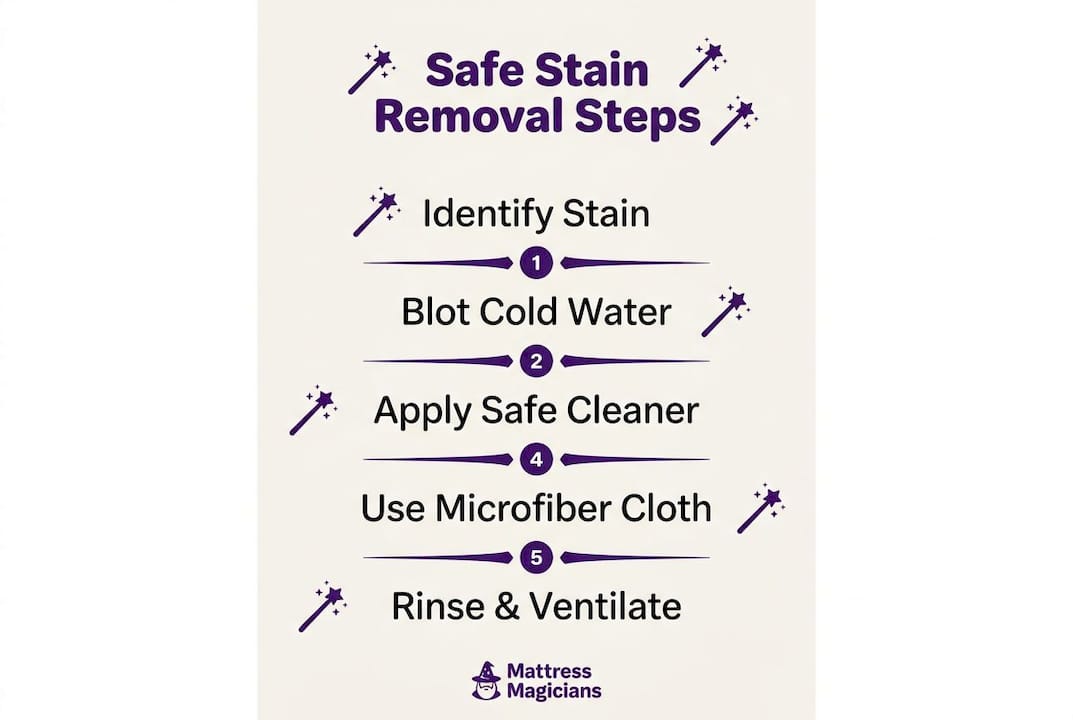
Here is a step-by-step approach that keeps chemical exposure low:
- Act immediately with cold water. Blot the stain with a clean, damp cloth. Cold water prevents proteins in food, blood, and urine from bonding deeper into fibers. Hot water sets those stains permanently.
- Apply cleaner to the cloth, not the surface. Pour or spray your chosen product onto a microfiber cloth. Press and blot. Never scrub, which spreads the stain and pushes it deeper.
- Ventilate the room. Open a window or run a fan during and after cleaning. Proper ventilation reduces inhaled chemical exposure from even family-safe products. This step is non-negotiable in bedrooms where children sleep.
- Rinse with plain water. After treating the stain, wipe the area with a clean, water-dampened cloth. This removes chemical residue from the surface.
- Dry completely before allowing contact. Keep children and pets away from the treated area until it is fully dry. Damp surfaces concentrate residue and increase skin absorption.
- Avoid multi-purpose disinfectants for daily stain removal. Disinfectants are formulated to kill pathogens, not lift stains. Using them daily adds unnecessary chemical load to surfaces children touch. Reserve them for genuine sanitation needs.
Mechanical cleaning with plain water reduces chemical use and airborne exposure, which is especially important in homes with children. Wet-dusting and wet-mopping before reaching for any product is a habit worth building.
Pro Tip: Keep a dedicated microfiber cloth and a small spray bottle of plain water near high-traffic areas like the kitchen and kids’ rooms. You can handle most fresh stains with water alone before a product is ever needed.
How to safely handle common household stains
Different stains need different approaches. Using the wrong method wastes time and can set a stain permanently. The table below covers the most common stains families face, the recommended safe method, and key precautions.
| Stain type | Recommended safe method | Precaution |
|---|---|---|
| Food and drink | Cold water blot, then enzyme-based cleaner on cloth | Avoid hot water; rinse thoroughly after treatment |
| Pet urine | Enzyme-based cleaner applied to cloth; let dwell 5–10 minutes | Do not scrub; allow full drying before pet contact |
| Grass | Cold water blot, then diluted dish soap (fragrance-free) | Rinse with plain water to remove soap residue |
| Blood | Cold water only first; enzyme cleaner if needed | Never use hot water; avoid bleach on fabric |
| Sweat and body oils | Baking soda paste left 15 minutes, then brush off | Test on a hidden area first; rinse completely |
DIY options and their limits
Baking soda and white vinegar are the most common DIY non-toxic stain cleaning ingredients. Baking soda absorbs odors and lifts surface residue. White vinegar breaks down mineral deposits and light organic stains. Mix them together and you get a fizzing reaction that looks effective but actually neutralizes both ingredients before they do much work. Use them separately for better results.
For pet accidents on mattresses, enzyme-based cleaners are the only DIY option that fully breaks down uric acid crystals. Without that, the odor returns when humidity rises. Apply the cleaner to a cloth, press it into the stain, cover with a clean towel, and let it sit for at least 10 minutes before blotting dry.
DIY methods work well on fresh, surface-level stains. Set stains, deep mattress contamination, and urine that has soaked through to the foam layer require professional treatment. Mattressmagicians uses non-toxic, family-safe products and extraction equipment that removes residue DIY methods leave behind. You can read more about safe mattress stain methods to understand where the line between DIY and professional falls.
What are best practices for storing stain removers around children and pets?
Safe storage prevents more injuries than safe formulas do. Approximately 240,862 children aged 5 or younger were treated in emergency departments for injuries related to household cleaning products between 2007 and 2022. Detergent packets alone accounted for 33% of detergent-related incidents. The product does not have to be toxic to cause serious harm when a toddler gets to it first.
Follow these storage rules without exception:
- Store all cleaning products in a locked cabinet or on a high shelf that requires a step stool for an adult to reach
- Keep products in their original containers with child-resistant caps fully closed after every use
- Never transfer a cleaner into a food or drink container, even temporarily
- Dispose of partially used products properly rather than leaving them under the sink
- Keep the Poison Control number (1-800-222-1222) visible in your kitchen and saved in your phone
Concentrated cleaning pods cause many pediatric injuries despite child-resistant packaging, because families store them in accessible locations. Child-resistant does not mean child-proof. Safe storage is as important as the product formula itself.
If a child or pet contacts a cleaning product, call Poison Control immediately. Do not wait for symptoms. Have the product label ready so the specialist can assess the exact ingredients. For eye contact, rinse with room-temperature water for 15–20 minutes before calling.
Eco-friendly cleaning services for families reduce the number of products you store at home, which directly reduces exposure risk. Fewer products in the cabinet means fewer opportunities for accidental contact.
Key Takeaways
Family-safe stain removal requires certified non-toxic products, cloth-applied technique, full residue rinsing, and locked storage to protect children and pets from chemical exposure.
| Point | Details |
|---|---|
| Certification over claims | Look for EPA Safer Choice or EWG Verified logos; ignore unverified “natural” or “green” labels. |
| Apply to cloth, not surface | Spraying directly creates airborne particles; always apply cleaner to a microfiber cloth first. |
| Rinse and dry completely | Wipe with plain water after treatment and keep children and pets away until fully dry. |
| Store locked and out of reach | Child-resistant caps are not enough; use locked cabinets for all cleaning products. |
| Know when to call a professional | Deep mattress stains and set urine require extraction equipment that DIY methods cannot replicate. |
Why “safer” products still require the right technique
I have seen the same pattern repeat itself in homes across the Twin Cities. A parent buys a certified safe stain remover, reads the label, and feels confident. Then they spray it directly onto the mattress, scrub it in, and let it air dry with the bedroom door closed. The product was fine. The technique undid every safety benefit.
The gap between product marketing and actual safe use is real. Pediatric Environmental Health Specialty Units are clear that no product is completely safe, and that safer products used correctly, combined with mechanical cleaning, minimize risk. That word “correctly” carries a lot of weight.
Ventilation is the most skipped step I see. Parents open a window in summer but not in february, when it matters just as much. Chemical residue in a closed bedroom accumulates over time. A child sleeping eight hours in that room breathes it all night. The fix is simple: open the window, run a fan, and wait until the surface is dry before the room is occupied again.
My honest advice is to start with the least chemical intervention possible. Cold water handles more stains than people expect. Baking soda handles odor. An enzyme cleaner handles the rest. Reserve stronger products for situations that genuinely require them, and always apply them to a cloth. The chemical exposure in bedrooms adds up quietly, and the bedroom is where your family spends the most time.
— Phillip
When professional mattress cleaning is the safer choice
Mattress stains are the hardest DIY challenge in family-safe cleaning. Urine, sweat, and pet accidents soak past the surface into foam layers where cloths and sprays cannot reach. Residue left behind feeds bacteria and odor even when the surface looks clean.
Mattressmagicians serves Minneapolis, St. Paul, Woodbury, and the surrounding Twin Cities metro with on-demand professional mattress stain removal using non-toxic, family-safe products and hot-water extraction that pulls contamination out of the foam. Same-week appointments are available for urgent situations like pet accidents or urine stains. If you are weighing whether to clean or replace, a professional clean almost always costs less and delivers a genuinely safe result. Book directly at mattressmagicians.com.
FAQ
What does “family-safe stain removal” mean?
Family-safe stain removal uses non-toxic, low-hazard products and application techniques that protect children and pets from harmful chemical exposure while effectively removing stains.
How do I know if a stain remover is truly safe for kids and pets?
Look for the EPA Safer Choice logo or EWG Verified rating. These certifications review every ingredient and prohibit harmful chemicals like PFAS and formaldehyde releasers.
Is vinegar and baking soda safe for removing stains around children?
Yes, both are non-toxic and safe for families. Use them separately for best results, since mixing them neutralizes both before they can work effectively.
How soon can children and pets return to a cleaned surface?
Wait until the surface is completely dry and the room has been ventilated. Wiping with plain water after treatment removes residue and speeds up safe contact time.
When should I call a professional instead of cleaning a mattress myself?
Call a professional when a stain has set, when urine has soaked into the foam layer, or when odor returns after DIY treatment. These situations require extraction equipment that removes contamination DIY methods leave behind.

