
TL;DR:
- Eco-friendly home cleaning in 2026 emphasizes concentrated, waterless formats that reduce emissions and packaging waste.
- Performance varies, with some eco-certified products testing higher for aquatic toxicity and microplastics than conventional cleaners.
Eco-friendly home cleaning trends in 2026 are defined by one shift: sustainability has moved from a premium choice to a baseline expectation. Green cleaning, the industry term for practices and products that minimize environmental and health harm, now shapes mainstream product formulations, packaging decisions, and even how robotic vacuums are designed. Three forces are driving this change: the discovery that household cleaners release microplastics at alarming scale, the rise of solid and waterless formats that slash shipping emissions, and growing consumer demand for full ingredient transparency. If you clean your home, these trends affect what you buy, how you use it, and what it does to your air.
What are the most impactful eco-friendly cleaning innovations in 2026?
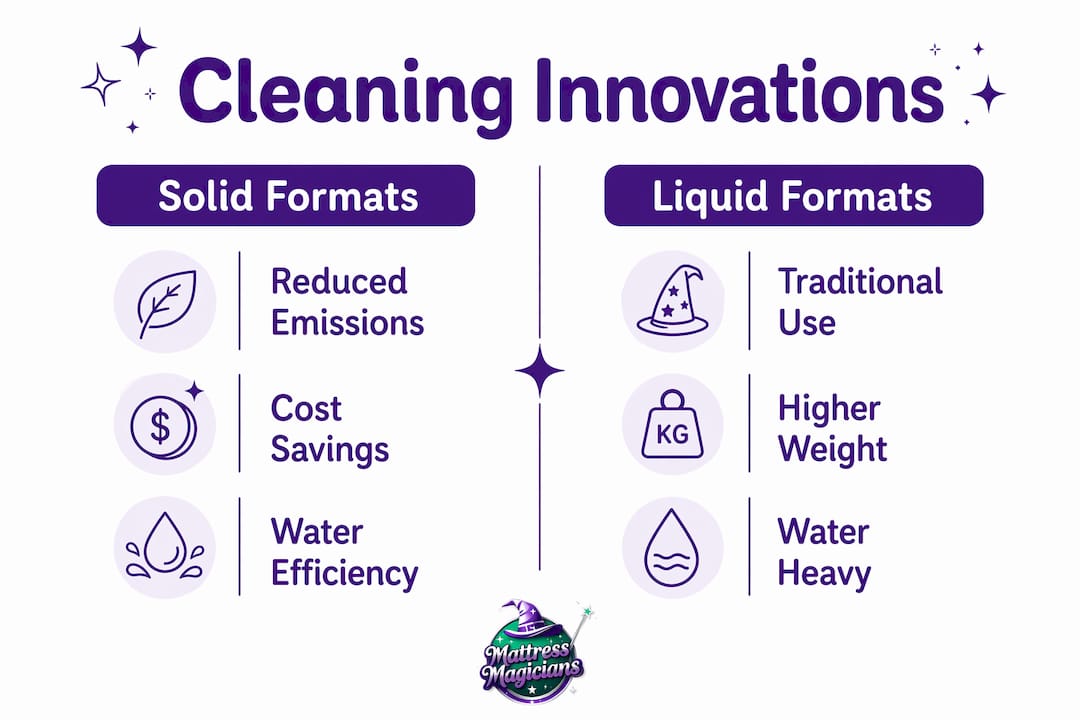
The biggest shift in sustainable cleaning products in 2026 is the move away from water-heavy liquid formulas toward concentrated, plant-based alternatives. Traditional liquid cleaners are roughly 90% water. Shipping that water across the country burns fuel and generates packaging waste. Concentrated plant-based formulas solve both problems at once.
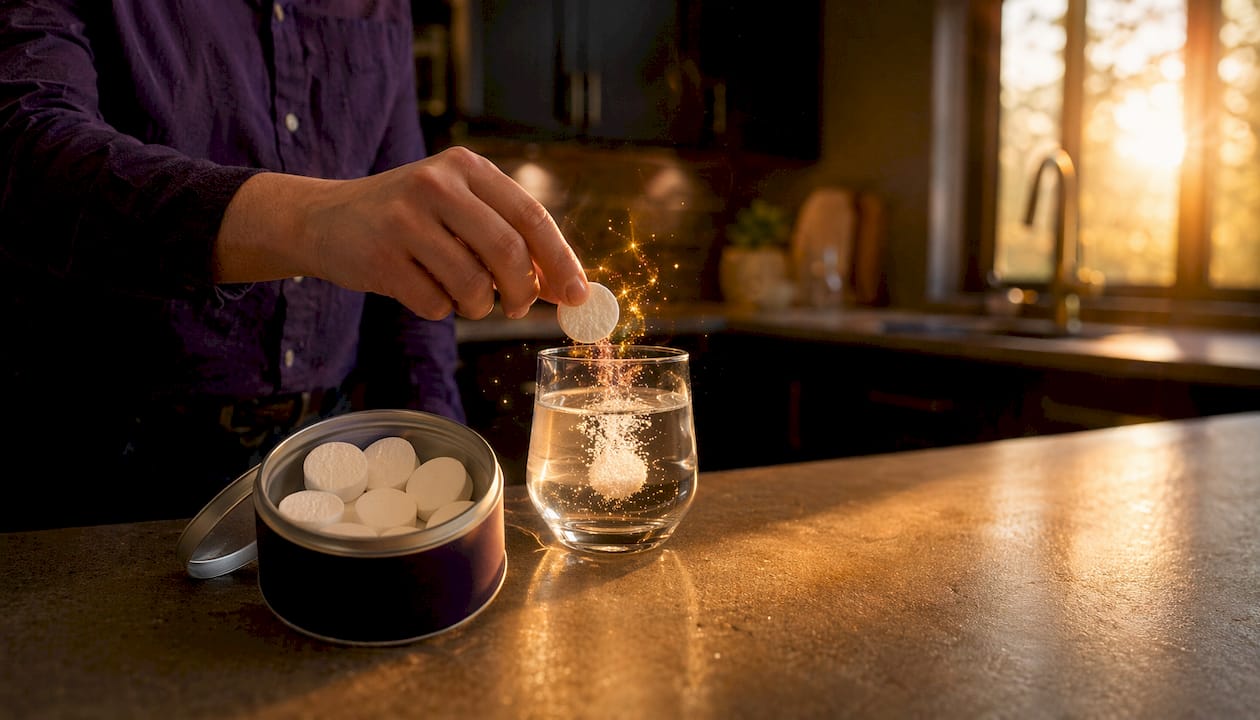
Solid cleaning formats reduce shipping carbon footprint by up to 95% and cut costs by 50% compared to traditional liquid cleaners. That number reflects the simple math of removing water from the supply chain entirely. Tablets and sheets now weigh as little as 8 grams each, making them easy to store, ship, and use without measuring.
The other major green cleaning innovation in 2026 is formulation compatibility with smart home systems. Robotic mops and automated dispensers require low-foam, fast-drying formulas that do not clog sensors or leave residue. Plant-based formulations are fastest growing partly because they meet these technical requirements while also offering biodegradability and traceable sourcing.
Fragrance technology has also advanced. Encapsulation techniques now release scent gradually during and after cleaning rather than all at once. This reduces the concentration of volatile organic compounds (VOCs) in the air at any single moment, which matters for indoor air quality.
- Concentrated plant-based formulas cut packaging and transport emissions without sacrificing cleaning power.
- Solid sheets and tablets weigh under 10 grams, dissolve fully in water, and leave no plastic bottle behind.
- Automation-compatible formulas work with robotic mops and smart dispensers without damaging sensors.
- Encapsulated fragrance releases scent slowly, reducing peak VOC exposure in enclosed spaces.
Pro Tip: When switching to solid cleaning tablets, dissolve them in warm water first. Cold water slows activation and can leave residue on surfaces.
How do eco-friendly cleaning products perform compared to conventional ones?
Performance is where green cleaning claims get complicated. The environmental benefits are real, but the safety picture is not as simple as the label suggests.
Household cleaning products release 40 trillion microplastic particles annually, with toilet bowl cleaners responsible for 56.44% of that contamination. Nearly 40% of detergents contain microplastics, including some products marketed as eco-friendly. That means a green label does not automatically mean microplastic-free.
Toxicity testing reveals another gap between marketing and reality. Some eco-certified detergents show higher acute aquatic toxicity than conventional alternatives due to high surfactant concentrations. One certified laundry gel tested at 10 times higher toxicity to algae and water fleas than a conventional variant. Biodegradable does not mean harmless at the point of discharge.
| Performance Factor | Eco-Friendly Products | Conventional Products |
|---|---|---|
| Microplastic content | Present in ~40% of products | Widely present |
| Aquatic toxicity | Variable; some certified products test higher | Generally lower in surfactant concentration |
| Carbon footprint (solid format) | Up to 95% lower shipping emissions | High due to water weight |
| Bathroom mildew removal | Requires acidic formulas or mechanical scrubbing | Stronger chemical options available |
| Biodegradability | High in certified products | Low to moderate |
Bathrooms remain the hardest area for eco products to perform well. Mildew and mineral deposits require acidic cleaners or physical scrubbing that many gentle plant-based formulas cannot deliver alone. Professional cleaners recommend pairing eco-acidic options like citric acid-based sprays with occasional mechanical scrubbing for tile grout and fixtures.
Pro Tip: Check the full ingredient list, not just the front label. Look for third-party certifications like EPA Safer Choice or ECOCERT, which require ingredient disclosure beyond basic biodegradability claims.
Which sustainable cleaning practices can homeowners adopt in 2026?
The best eco cleaning practices in 2026 combine smarter product choices with better habits. Products matter, but how you use them matters just as much.
1. Choose products with real transparency. Look for EPA Safer Choice certification, ECOCERT, or Leaping Bunny labels. These require ingredient disclosure and third-party testing. A product that lists every ingredient, including fragrance components, gives you the information to make an informed choice.
2. Make simple DIY formulas for everyday tasks. White vinegar diluted with water handles glass and general surfaces. Baking soda paste removes light stains and deodorizes. Castile soap mixed with water works as a multipurpose cleaner for floors and counters. These formulas contain no microplastics and no synthetic surfactants.
3. Ventilate during and after cleaning. Indoor air quality improves significantly with proper ventilation during and after cleaning. VOCs from cleaning products, including plant-based ones, accumulate in closed spaces. Open windows, run exhaust fans, and wait at least 15 minutes before closing up a freshly cleaned room.
4. Use the minimum effective dose. More product does not mean cleaner surfaces. Overdosing leaves residue, increases VOC exposure, and wastes money. Concentrated formulas especially require precise measurement. Read the dilution instructions and follow them.
5. Switch surfaces to solid formats where possible. Laundry sheets, dishwasher tablets, and multipurpose cleaning tablets eliminate plastic bottles entirely. For a Twin Cities household generating weekly cleaning waste, the reduction in single-use plastic adds up fast across a year.
Pro Tip: Store your DIY vinegar-based cleaner in a dark glass bottle. UV exposure degrades acetic acid over time, reducing its effectiveness.
For families with young children or pets, the eco-friendly bedroom cleaning guide from Mattressmagicians covers room-specific strategies that go beyond general surface cleaning.
What future trends will shape eco-friendly home cleaning beyond 2026?
The home cleaning sustainability trends building now will define the next several years. Four directions stand out as the most significant.
- Automation integration will deepen. Smart home cleaning systems are already pushing formulators to develop products that work inside robotic dispensers and sensor-equipped mops. As these devices become more common, the demand for automation-compatible eco formulas will grow faster than the general cleaning market.
- Wellness-centered fragrance will become standard. Consumers increasingly expect cleaning products to support mental wellbeing, not just hygiene. Scent profiles designed to reduce stress or improve sleep are entering mainstream product lines. Encapsulation technology makes this possible without spiking VOC levels.
- Certification standards will tighten. The gap between marketing claims and lab results, especially on aquatic toxicity, is drawing regulatory attention. Expect stricter standards that go beyond biodegradability to include full surfactant toxicity profiles and microplastic content disclosure.
- Eco-cleaning will become the default, not the premium. 87% of cleaning professionals already prioritize sustainability. As supply chains mature and solid formats scale, the price premium for green products will shrink. Within a few years, choosing a conventional liquid cleaner in a single-use plastic bottle will feel as outdated as buying incandescent bulbs.
The weekly cleaning automation guide from Octo Maids offers a practical look at how smart systems and eco formulas are already working together in real homes.
Key Takeaways
Green cleaning in 2026 requires choosing certified products, using them correctly, and ventilating your home, because the label alone does not guarantee safety or effectiveness.
| Point | Details |
|---|---|
| Solid formats cut emissions | Solid cleaning tablets and sheets reduce shipping carbon footprint by up to 95% versus liquid alternatives. |
| Eco labels need scrutiny | Some certified detergents test higher for aquatic toxicity than conventional products due to surfactant concentration. |
| Ventilation is non-negotiable | Opening windows during and after cleaning removes VOCs that accumulate even from plant-based products. |
| Microplastics are still present | Nearly 40% of detergents contain microplastics, including products marketed as eco-friendly. |
| Automation is reshaping formulas | Smart home systems require low-foam, fast-drying plant-based formulas, accelerating eco product development. |
The green label problem nobody talks about enough
I’ve spent years watching homeowners make the switch to eco-friendly cleaning products and feel genuinely good about it. That’s not wrong. The shift matters. But the part that frustrates me is how often the label does the work instead of the product.
The microplastic data is the clearest example. You buy a product with a leaf on the bottle, a biodegradable claim on the back, and a price that signals quality. Then you find out it still contains microplastic particles. The certification system has not caught up to the science. Until it does, homeowners are left doing their own homework.
What I’ve found actually works is treating eco-cleaning as a practice, not a purchase. Ventilate every time. Use the right dose. Know which surfaces need more than a gentle formula. Bathrooms, in particular, will beat a plant-based spray every time if you skip the mechanical scrubbing.
The other thing I’d push back on: DIY is powerful for everyday surfaces, but it has real limits. Mattresses, upholstery, and deep-pile textiles trap allergens, dust mites, and odors in ways that vinegar and baking soda cannot fully address. That’s where professional cleaning fills the gap that eco products cannot. Combining both is the most honest approach to a healthier home.
— Phillip
Professional mattress cleaning that fits your eco-friendly home
Eco-conscious homeowners put real effort into what they spray on their counters and floors. The mattress often gets overlooked, even though it collects years of sweat, skin cells, dust mites, and allergens that no surface spray can reach.
Mattressmagicians provides professional mattress cleaning services across the Twin Cities, including Minneapolis, St. Paul, and Woodbury. The process targets allergens, odors, and buildup deep inside the mattress, not just on the surface. For households managing pet accidents or persistent odors, the mattress odor removal service eliminates smells at the source rather than masking them. Pairing a professional deep clean with your sustainable surface cleaning routine gives you a genuinely healthier sleep environment, not just a cleaner-looking one.
FAQ
What are the top eco-friendly home cleaning trends in 2026?
The leading trends are solid and waterless cleaning formats, concentrated plant-based formulas, automation-compatible products, and tighter ingredient transparency standards. Solid formats alone reduce shipping carbon footprint by up to 95% compared to traditional liquid cleaners.
Do eco-certified cleaning products always have lower toxicity?
No. Some eco-certified detergents test at significantly higher acute aquatic toxicity than conventional products due to high surfactant concentrations. Always check for third-party certifications that require full ingredient disclosure, not just biodegradability claims.
How do I improve indoor air quality when cleaning with eco products?
Open windows and run exhaust fans during and after cleaning. VOCs from cleaning products, including plant-based ones, accumulate in closed spaces and degrade indoor air quality. Ventilation is the most effective way to reduce exposure.
Are solid cleaning tablets as effective as liquid cleaners?
Yes, for most household surfaces. Solid tablets dissolve fully in water and deliver the same active ingredients as liquid formulas. Bathrooms with heavy mineral deposits or mildew may still require acidic formulas or mechanical scrubbing alongside solid-format products.
How often should a mattress be professionally cleaned for a healthy home?
Most households benefit from professional mattress cleaning once or twice a year. Homes with pets, allergy sufferers, or young children may need more frequent service to control dust mites, allergens, and odor buildup that surface cleaning cannot reach.

