
TL;DR:
- Most sleep problems stem from environmental, behavioral, mattress hygiene, or clinical issues that can often be fixed. Addressing room temperature, light, noise, and routines provides quick improvements, but persistent issues may require medical evaluation. Regular mattress cleaning and timely replacement can significantly improve sleep quality and reduce allergy symptoms.
Most people who struggle to sleep are dealing with one of four categories of disruptors: environmental (light, noise, temperature), behavioral (caffeine, screens, irregular schedules), mattress and bedding hygiene (dust mites, odors, sweat buildup), or clinical (sleep apnea, insomnia, chronic pain). The good news is that the first two categories are fixable tonight, the third often needs professional attention, and the fourth warrants a doctor’s visit.
Here are the most common sleep disruptors and what to do about each one:
- Light exposure: Block it with blackout curtains or an eye mask tonight; install smart lighting this week.
- Noise: Use earplugs or a white noise machine tonight; rearrange furniture away from shared walls this week.
- Room temperature: Drop your thermostat to 65°F–68°F tonight.
- Caffeine and alcohol: Cut caffeine after noon and skip alcohol within three hours of bed.
- Screens and blue light: Put devices away 90 minutes before sleep.
- Mattress contamination: Check for odors, stains, and allergy symptoms; book professional cleaning if DIY fails.
- Stress and anxiety: Start a 90-minute wind-down routine; see a provider if sleep loss persists three or more nights a week.
- Medical conditions: Track symptoms for two weeks, then consult your doctor.
Table of Contents
- 1. Your room environment is one of the easiest high-impact fixes
- 2. Behaviors and routines that quietly wreck your sleep
- 3. Mattress hygiene is the disruptor most people never check
- 4. Medical and clinical sleep disruptors: when to see a doctor
- 5. A step-by-step checklist to find and fix your disruptors
- 6. Clean, repair, or replace your mattress?
- Key Takeaways
- What most sleep advice gets wrong about mattress hygiene
- Mattressmagicians brings professional mattress cleaning to your door
- Useful sources and further reading
- FAQ
1. Your room environment is one of the easiest high-impact fixes
Light is the most underestimated disruptor. Even a small LED clock or streetlamp glow can suppress melatonin production. Blackout curtains are the single fastest upgrade; window film works for renters who can’t install hardware. For clocks, flip them face-down or cover the display.
Noise follows a similar pattern. Traffic, neighbors, and HVAC hum fragment sleep without fully waking you, which is why you feel exhausted despite “sleeping” eight hours. White noise machines mask irregular sounds better than earplugs alone because they eliminate the contrast between silence and sudden noise.
Temperature matters more than most people realize. A cool room around 65°F–68°F supports the natural drop in core body temperature that triggers deep sleep. Breathable cotton or linen bedding helps; synthetic materials trap heat and pull you into lighter sleep stages.
Sleep-ready room checklist:
- Blackout curtains or eye mask
- White noise machine or fan
- Thermostat set to a comfortably cool temperature
- All screens and work devices out of the bedroom
- Pets sleeping elsewhere (dander and movement disrupt sleep)
- Mattress and pillows replaced if worn or uncomfortable
Pro Tip: Dim your lights to roughly half brightness starting 90 minutes before bed. Your brain reads light intensity as a proxy for time of day, so a gradual dim signals “night” more effectively than a sudden switch.
2. Behaviors and routines that quietly wreck your sleep
The single most effective behavioral change you can make is fixing your wake time. A consistent wake time anchors your circadian rhythm faster than any other adjustment, including bedtime.
Caffeine has a half-life of roughly 5–6 hours, meaning a 3 PM coffee still has half its stimulant load in your system at 9 PM. Health experts recommend avoiding caffeine after lunch if it affects your sleep. Alcohol is trickier: it helps you fall asleep but fragments the second half of the night and suppresses REM sleep, which is critical for memory and mood. Nicotine is a stimulant with the same timing problem as caffeine.
Screens deserve their own mention. Blue light from phones and tablets delays melatonin release, but the bigger issue is mental stimulation. Scrolling social media or watching intense content keeps your brain in alert mode regardless of the light.
Your 90-minute pre-sleep timeline:
- T-90 min: Dim lights, stop work emails, put away devices.
- T-60 min: Take a warm bath or shower (the cooling effect afterward signals sleep onset).
- T-30 min: Light reading, stretching, or breathing exercises only.
- Bedtime: Room dark, cool, and quiet.
Pro Tip: If you’re lying awake for more than 20 minutes, get out of bed. Staying in bed while anxious trains your brain to associate the bed with wakefulness. Sit in a dim room until you feel sleepy, then return. This is called stimulus control and it’s one of the most evidence-backed insomnia fixes available.
3. Mattress hygiene is the disruptor most people never check
Most people wash their sheets but never think about what’s happening inside the mattress itself. After years of use, a mattress accumulates sweat, dead skin cells, pet dander, and moisture, creating conditions where dust mites multiply and mold can take hold. Dust mites feed on dead skin and their waste particles trigger hay fever and asthma-like symptoms that cause nighttime awakenings.
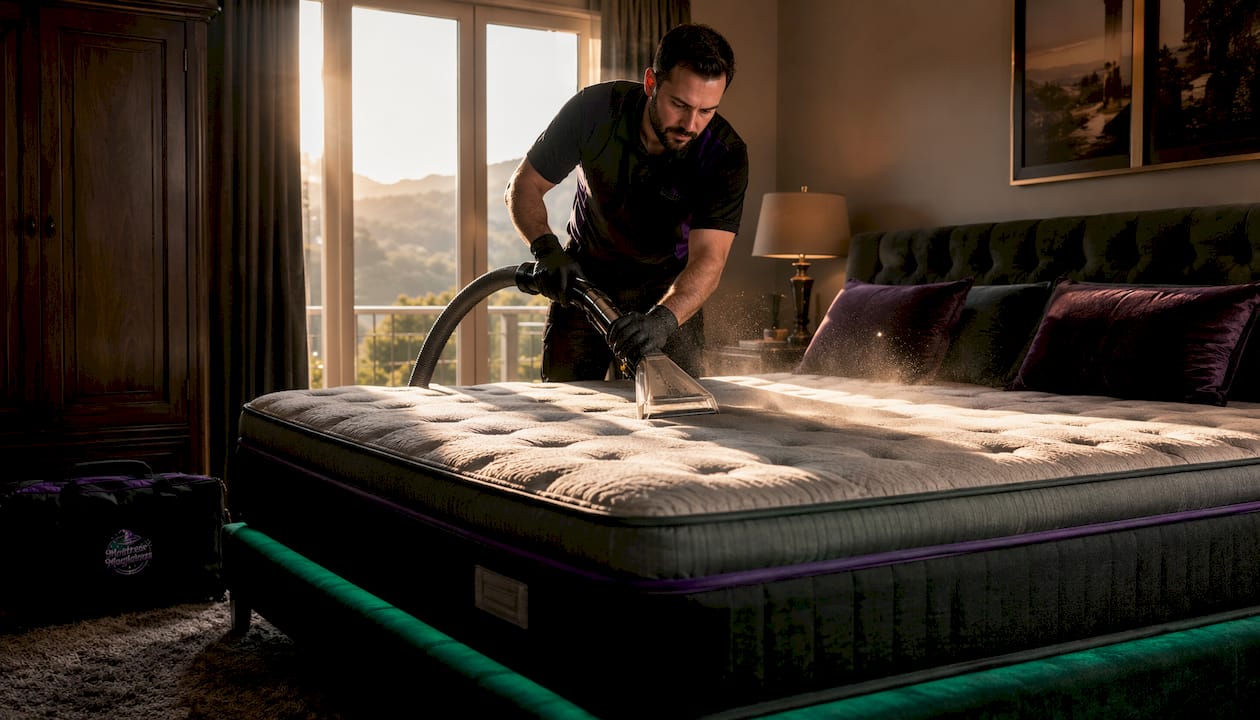
By around seven years of use, a mattress can develop a microbial shift favoring strains linked to respiratory and skin issues. Routine sheet-washing doesn’t reach deep-layer contamination. Research has also found a link between infrequent mattress cleaning and markedly shorter reported sleep duration; one study found people who cleaned their mattresses every 5.4 months averaged about three hours of sleep per night.
DIY mattress check:
- Visible stains or discoloration
- Persistent odor even after airing out
- Tacky or damp feel on the surface
- Allergy or asthma symptoms that worsen at night
- Waking up more frequently than usual
DIY vs. professional cleaning:
| Situation | DIY Sufficient? | Recommended Action |
|---|---|---|
| Light surface dust, no odor | Yes | Vacuum + baking soda |
| Mild odor, no stains | Possibly | Baking soda + airing; reassess in a week |
| Visible stains or urine | No | Professional extraction |
| Pet dander, allergy symptoms | No | Professional sanitization |
| Mattress 7+ years old with odor | No | Professional deep clean or replace |
| Mold or persistent musty smell | No | Professional treatment; consider replacement |
Pro Tip: Wash sheets weekly and use a quality mattress protector to slow contamination buildup. A protector costs far less than a professional cleaning and extends the time between services.
Twin Cities residents dealing with odors, stains, or allergy flare-ups can get a same-week assessment from Mattressmagicians. Their mobile service comes to you in Minneapolis, St. Paul, Woodbury, and surrounding areas.
4. Medical and clinical sleep disruptors: when to see a doctor
Environmental and behavioral fixes help most people. But if you’ve addressed your room, your routine, and your mattress and still can’t sleep, a clinical cause may be driving the problem.
Key red flags that warrant medical assessment:
- Loud snoring, gasping, or witnessed breathing pauses (possible sleep apnea)
- Taking 30 or more minutes to fall asleep most nights
- Waking repeatedly and struggling to return to sleep
- Daytime fatigue severe enough to affect work or driving
- Heartburn or chest discomfort when lying down (GERD)
- Restless, uncomfortable sensations in your legs at night
- Sleep problems persisting three or more nights per week for three months
CBT-I (Cognitive Behavioral Therapy for Insomnia) is the first-line, non-pharmacological treatment for long-term insomnia. It runs 6–8 weeks and consistently outperforms sleep medication for lasting results. Your primary care provider can refer you, or you can access it through digital platforms like Sleepio.
Common medications that disrupt sleep include certain antihistamines, decongestants, corticosteroids, and some antidepressants. If you recently started a new prescription and your sleep changed, mention it to your prescriber.
Pro Tip: Before your appointment, keep a two-week sleep log tracking bedtime, wake time, caffeine and alcohol intake, exercise, and how you felt in the morning. A log gives your doctor concrete data instead of a vague “I sleep badly” complaint, and it often reveals patterns you hadn’t noticed.
5. A step-by-step checklist to find and fix your disruptors
Run this in order. Most people find their answer by step four.
- Tonight: Set your thermostat to a comfortably cool temperature, block all light, and put devices away 90 minutes before bed.
- This week: Fix your wake time. Set an alarm and keep it every day, including weekends, for seven days.
- Days 2–3: Cut caffeine after noon and eliminate alcohol within three hours of bedtime.
- Day 4: Do a mattress check using the DIY list above. Note odors, stains, or allergy symptoms.
- Week 2: If sleep is still poor, start a sleep log tracking all variables for 14 days.
- Week 2–3: If mattress hygiene checks fail DIY cleaning, book a professional mattress cleaning in the Twin Cities.
- Week 3–4: If sleep problems persist three or more nights per week, bring your sleep log to a healthcare provider and ask about CBT-I.
6. Clean, repair, or replace your mattress?
The one-line rule: clean for surface odors and stains under five years old, get professional sanitization for deep contamination or allergy symptoms, and replace if there’s structural damage or the mattress is 10–15 years old with persistent problems.
Decision checklist:
- Odor only, mattress under 7 years: Professional odor removal service is usually sufficient.
- Stains or urine, no structural damage: Professional extraction restores the mattress.
- Allergy symptoms, dust mites, pet dander: Professional sanitization reduces allergen load significantly.
- Sagging, broken springs, or coils felt through the surface: Replace. No cleaning fixes structural failure.
- Mattress over 10–15 years with ongoing sleep issues: Replace, even if it looks clean.
- Mold visible or persistent musty smell after cleaning: Replace immediately.
For Twin Cities residents unsure which category they’re in, Mattressmagicians offers on-site assessments. Their team handles stain and urine removal, deep sanitization, and odor elimination before recommending replacement.
Key Takeaways
Poor sleep usually traces back to one of four fixable categories: environment, behavior, mattress hygiene, or a clinical condition, and addressing them in that order gets most people results within two weeks.
| Point | Details |
|---|---|
| Fix environment first | Set room to 65°F–68°F, block light and noise tonight for immediate impact. |
| Start the 90-minute wind-down | Stop screens, dim lights, and avoid stimulants 90 minutes before bed. |
| Check your mattress | Odors, stains, allergy flare-ups, and 7+ years of use are signs professional cleaning is needed. |
| Seek medical help when warranted | Persistent sleep problems three or more nights per week for three months need clinical evaluation and possibly CBT-I. |
| Mattressmagicians for Twin Cities residents | Same-week mobile cleaning for odors, stains, dust mites, and allergens across Minneapolis, St. Paul, and Woodbury. |
What most sleep advice gets wrong about mattress hygiene
Most sleep guides spend three paragraphs on blue light and one sentence on mattresses. That’s backwards for a lot of people. The mattress is where you spend a third of your life, and after a few years it’s carrying a load of sweat, skin cells, and microbial buildup that no amount of sheet-washing touches.
What surprises me is how often people in the Twin Cities book a cleaning after years of unexplained allergy symptoms or night awakenings, and the difference is immediate. The environmental and behavioral fixes matter, but if your mattress is the source, no wind-down routine will fully compensate. Check the mattress first if you’ve already tried the basics and still can’t sleep through the night.
Mattressmagicians brings professional mattress cleaning to your door
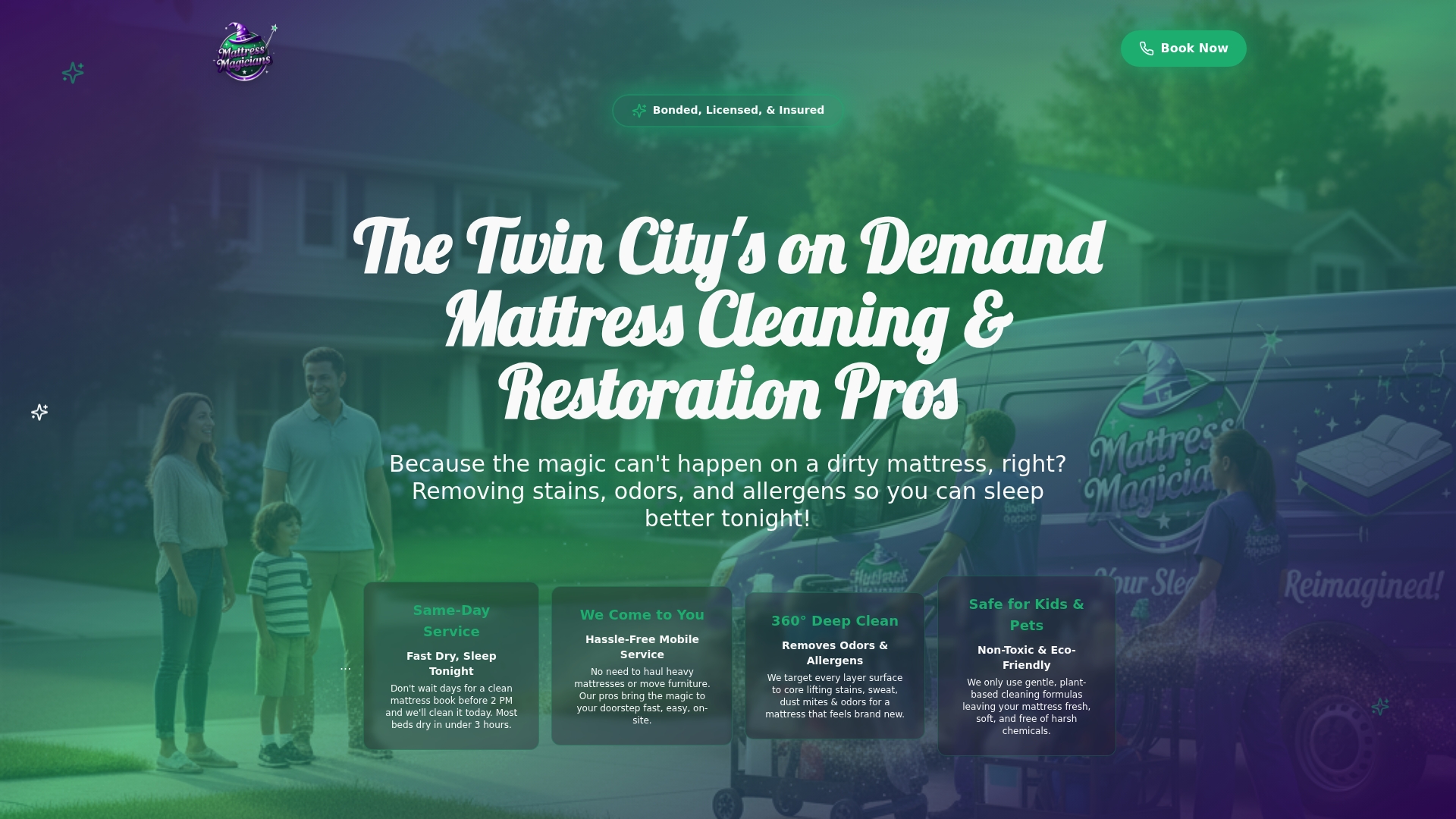
When DIY methods don’t cut it, Mattressmagicians is the Twin Cities’ on-demand solution for mattress odor removal, stain and urine extraction, dust mite sanitization, and allergen reduction. The service is fully mobile: a technician comes to your home in Minneapolis, St. Paul, Woodbury, or the surrounding metro, handles the cleaning on-site with professional-grade equipment, and leaves your mattress fresh without the hassle of hauling it anywhere.
Same-week appointments are available for urgent situations like pet accidents, urine stains, or pre-move-out cleanings. The process uses safe, non-toxic sanitization methods appropriate for households with children, pets, and allergy sufferers. Ready to sleep better? Book your mattress cleaning at mattressmagicians.com.
Useful sources and further reading
- Harvard Health: Sleep — Comprehensive overview of sleep disorders, insomnia causes, and sleep hygiene practices.
- CDC/NIOSH: Improve Your Sleep — Evidence-backed environmental and behavioral recommendations including the 90-minute wind-down and temperature targets.
- NCBI Bookshelf: Sleep Disorders and Problems — Clinical reference on insomnia, stimulus control, and when to seek medical evaluation.
- Cleveland Clinic: Sleep Hygiene — Practical guidance on caffeine, alcohol, and pre-sleep routines.
- BBC Science Focus: Your Bed’s Hidden Biome — Explains how dust mites and bed bacteria affect allergies and sleep quality.
- Nine.com.au: How Often to Replace Your Mattress — Covers the seven-year microbial threshold and professional cleaning recommendations.
- Psychreg: Dirty Bedding Linked to Poor Sleep — Reports the correlation between infrequent mattress cleaning and shorter sleep duration.
FAQ
What are the most common sleep disruptors?
The most common sleep disruptors fall into four categories: environmental (light, noise, temperature), behavioral (caffeine, alcohol, irregular schedules, screens), mattress and bedding hygiene (dust mites, odors, sweat buildup), and clinical conditions like sleep apnea and insomnia.
How does mattress hygiene affect sleep quality?
Accumulated dust mites, pet dander, bacteria, and odors in a mattress can trigger allergy symptoms and nighttime awakenings. Research links infrequent mattress cleaning to markedly shorter sleep duration; individuals cleaning every 5.4 months averaged about three hours of sleep per night in one cited study.
When should I see a doctor about sleep problems?
See a doctor if you struggle to fall or stay asleep three or more nights per week for three months, or if you experience loud snoring, gasping, or severe daytime fatigue. CBT-I is the recommended first-line treatment for long-term insomnia and runs 6–8 weeks.
Can professional mattress cleaning actually improve sleep?
Yes. Removing deep-layer contaminants like dust mites, pet dander, and odor-causing bacteria reduces the allergen load and eliminates the physical conditions that cause nighttime awakenings. Mattressmagicians provides this service across the Twin Cities with same-week availability.
What temperature should my bedroom be for better sleep?
Most sleep experts recommend keeping your bedroom between 65°F and 68°F at night. This supports the natural drop in core body temperature that triggers and sustains deep sleep.

